We have spent decades treating access to orbit as the expensive part of every space plan, the brutal line item that turns ambitious hardware into a PowerPoint slide. That assumption is starting to look dated.
A new study covering 4,405 launches found that the average cost of placing 1 kilogram, or 2.2 pounds, into orbit fell 96% between 1960 and 2025. If the measured trend continues, the figure could drop much further by 2040. That is a big if, and it deserves more attention than the headline number.
What the study actually measured
The researchers assembled data on more than 330 rocket configurations used across the United States, Russia, China, India, Europe, Japan, Australia, Brazil, Israel, Iran, South Korea and Ukraine. Francesco Nicoli of the Politecnico University of Turin and Alessio Terzi of the University of Cambridge were among the study’s authors. Their findings were published July 14 in PNAS Nexus.
The important bit is the method. Earlier attempts to chart launch costs often concentrated on what rockets cost without fully accounting for how much payload each system delivered over its operational life. That can distort comparisons between a rocket that flies rarely and one that repeatedly carries substantial mass.
Using costs adjusted to 2024 U.S. dollars, the team calculated that the average cost per kilogram declined from $87,023 in 1960 to $3,868 in 2025. We should be precise here: this is an industry-wide average tied to payload delivered, not a universal price that every customer can expect to see on an invoice.
Launch has followed a steep learning curve
The study found that each doubling of cumulative payload launched by the industry corresponded with a 21.2% reduction in average cost per kilogram. Economists call this a learning rate. In plain English, the industry became cheaper as it accumulated experience and moved more mass.
That 21.2% rate was faster than the learning rate identified for solar panels, a technology frequently used to illustrate how manufacturing scale and accumulated knowledge can drive prices down. Rockets are not interchangeable commodities, of course. Missions differ in destination, orbit, payload requirements and schedule. The comparison still gives us a useful sense of how quickly launch economics have changed.
The study points to two broad phases behind that progress:
- The post-Cold War commercial shift: National launch programs once prioritized strategic access to space even when costs were high. Commercial competition placed greater pressure on providers to improve efficiency.
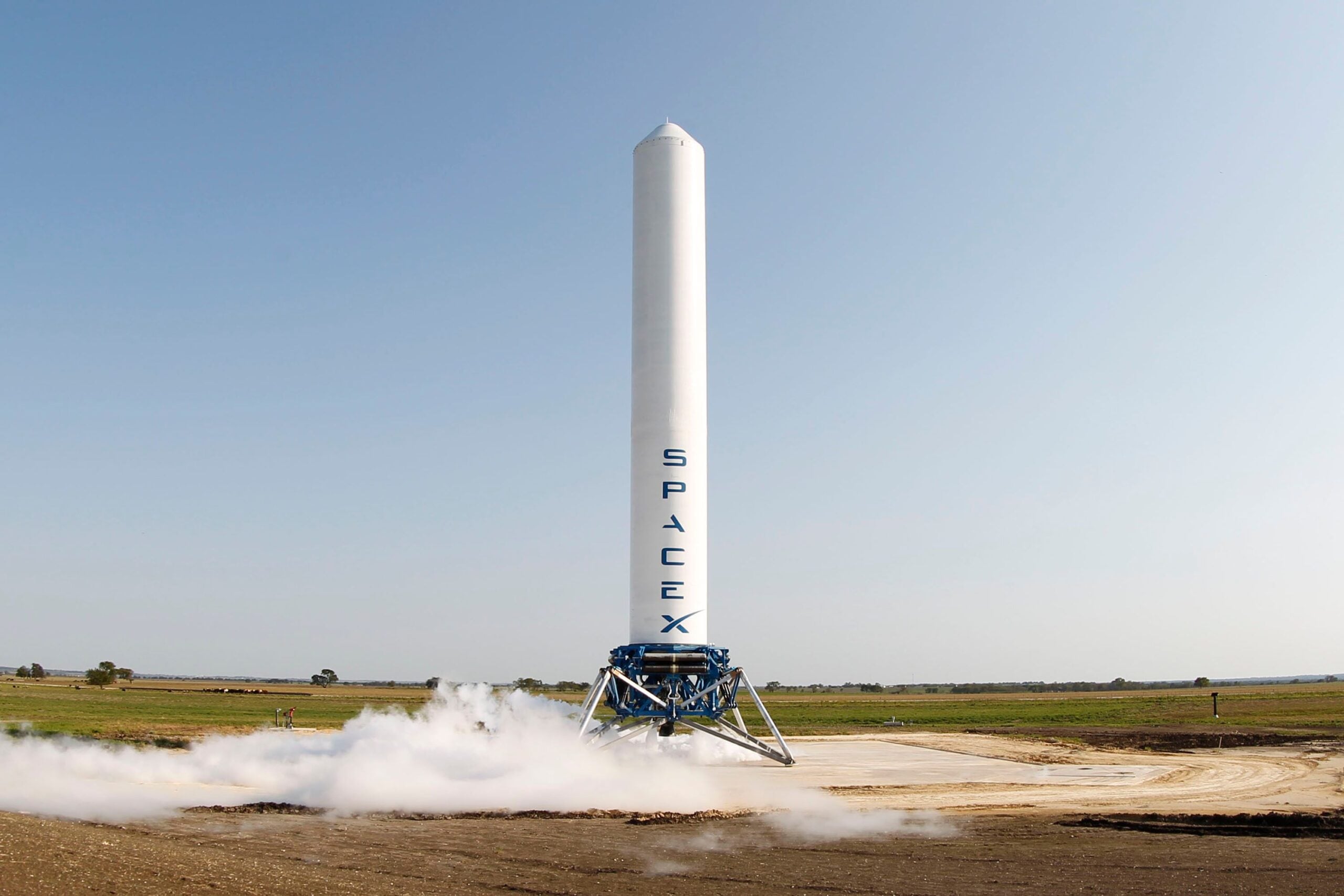
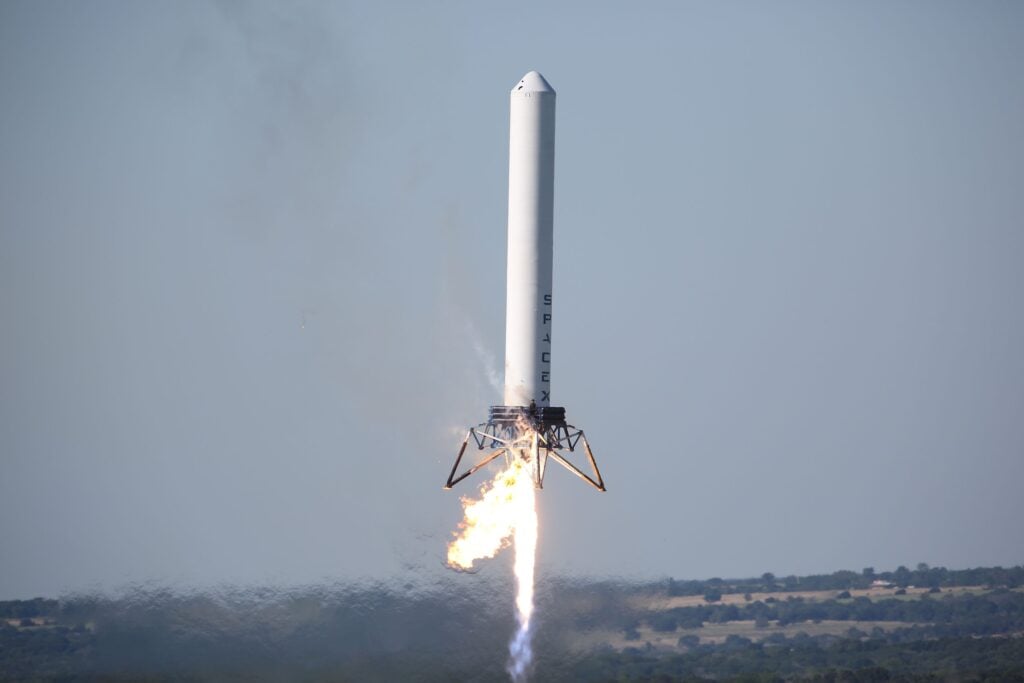
- Reusable launch hardware at scale: The learning rate accelerated after the introduction of SpaceX’s Falcon 9 and the routine recovery of its first stage.
Falcon 9 is a reusable two-stage rocket. Recovery does not make a flight free. Stages still require inspection, refurbishment, ground crews and propellant. It does, however, change the basic equation by reducing how much major hardware must be discarded after each mission. The cadence is no longer theoretical either, as a Falcon 9 Starlink launch from California showed in June 2026.
How low could launch costs go?
If the historical learning rate holds, the researchers project an average launch cost of $1,600 per kilogram in 2030 and $300 per kilogram in 2040. The latter would represent another decline of roughly 92% from the 2025 level.
We should treat those numbers as a modeled path, not a booking quote from the future. Forecasts based on learning curves assume that the conditions producing earlier gains will keep operating. That means enough demand to increase cumulative payload, enough competition to reward lower costs and no external constraint severe enough to interrupt launch activity.
Lower launch costs could alter the design choices available to satellite operators. Engineers may gain more freedom over payload mass, replacement schedules and constellation size. Scientific missions could also benefit if transportation consumes a smaller share of a fixed budget. None of those outcomes follows automatically, since spacecraft development, operations, insurance and ground infrastructure remain separate expenses.
Three obstacles could bend the curve

The study identifies three reasons the cost decline may slow or reverse. None is a minor technical footnote.
1. Orbital debris could make every mission harder
Debris in orbit can travel at roughly 16,800 mph, or 27,000 km/h. At that speed, even a small fragment can damage a spacecraft. High-speed impacts are a practical risk for operators, not merely an ugly byproduct of launch growth.
The nastiest possibility is a cascade in which collisions create more fragments, which then cause further collisions. NASA scientist Donald Kessler described this danger in 1978, and his name became attached to the scenario. More avoidance maneuvers, shielding, tracking and regulatory limits would all add friction to the cheap-launch trajectory.
2. Market concentration could weaken price pressure
SpaceX currently accounts for roughly 75% of the payload sent to orbit globally, based on the study’s calculations. That scale helps explain the industry’s cost improvement, but it also creates a potential competition problem.
A provider with overwhelming market power has less incentive to pass every efficiency gain to customers. Higher prices could then suppress launch demand, reducing the cumulative payload growth that drives the study’s learning curve. We can admire the engineering achievement and still recognize that market structure matters. A recent Falcon 9 launch abort is also a useful reminder that a high-flight-rate system still depends on cautious operations and mission assurance.
3. Governments may pay more for independent access
Launch systems are commercial products, strategic infrastructure and national security assets at the same time. Governments may be reluctant to depend heavily on one U.S. company, especially as geopolitical tensions rise.
That could encourage countries to maintain domestic launch capabilities even when those systems cost more per kilogram. From a narrow efficiency perspective, duplication looks wasteful. From a national policy perspective, guaranteed access to orbit may justify the premium. The same logic shaped launch programs during the Cold War and could reappear in a different form, particularly as China’s launch activity continues to underline the strategic value of independent capacity.
Cheap launch is not the same as cheap spaceflight
This is the distinction we need to keep on the screen. A lower average cost per kilogram does not mean every mission becomes inexpensive, nor does it erase the cost of building reliable spacecraft.
The metric also combines different rockets, customers and mission profiles into one industry average. A dedicated launch to a difficult orbit will not necessarily follow the same price path as a payload sharing a frequently flown route. Reliability, schedule control and orbital destination still carry economic value. Capacity can tighten even while long-run average costs fall, as the 2026 smallsat launch capacity squeeze makes clear.
Even with those caveats, a 96% decline across six decades is substantial. It shows that launch is not trapped at a fixed cost imposed by physics alone. Manufacturing, flight rate, operational experience, competition and reuse have all changed what reaching orbit costs.
The next phase depends on more than rockets
The engineering case for further reductions is credible, but the forecast now runs into policy, orbital management and competition. We can build reusable stages and fly them more often. We cannot solve debris accumulation or market concentration with a better engine cycle alone.
A fall to $300 per kilogram by 2040 would redraw the economics of space activity. Missing that target would not erase the progress already measured. The real test is whether the industry can preserve the conditions that produced cheaper launches while preventing its own growth from making orbit riskier and less competitive. That is the launch problem now sitting in front of us.