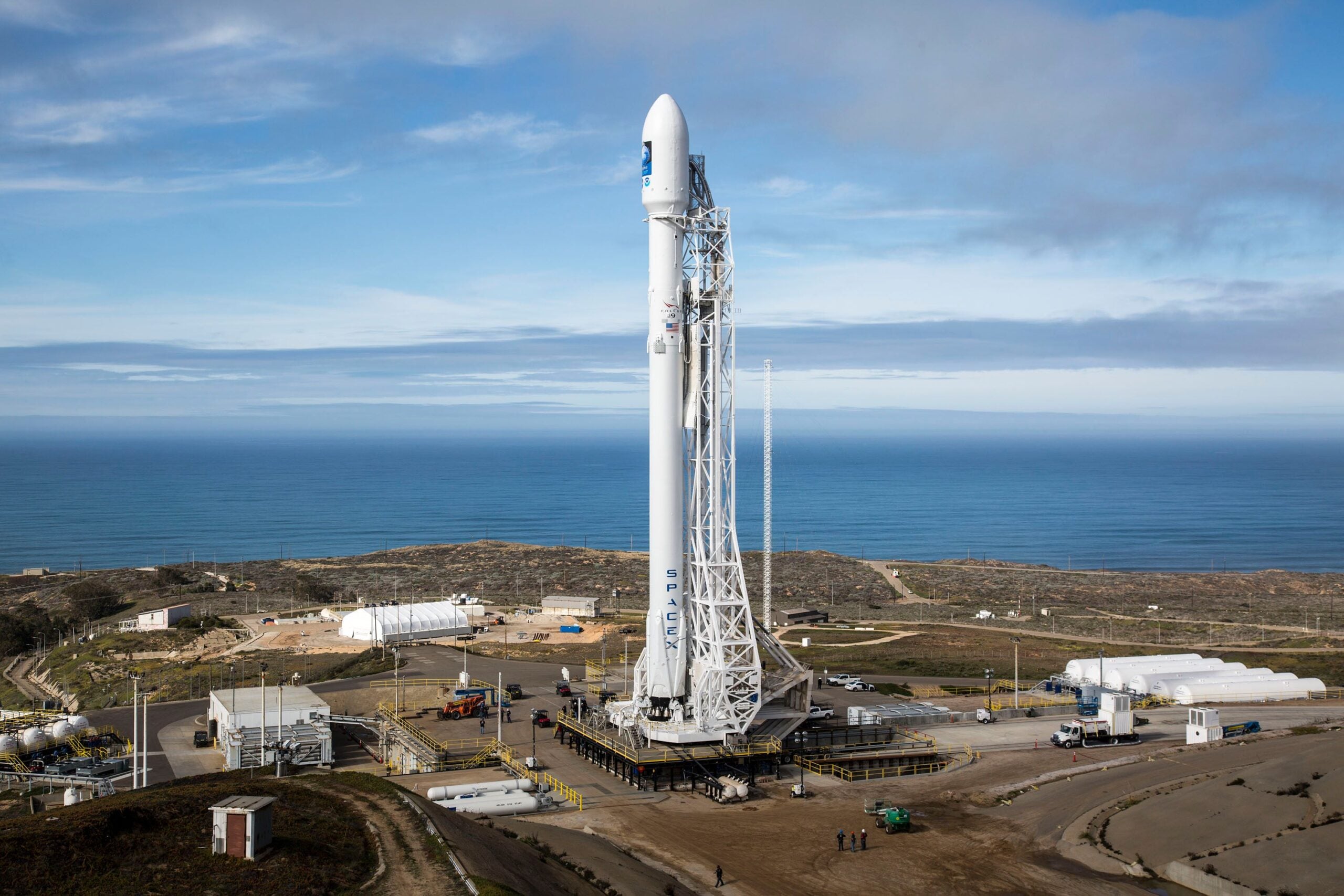
Okay, if we follow rocket launches the way we follow patch notes, tonight’s Falcon 9 flight is the kind of update that looks routine until we read the changelog. Yes, it is another Starlink launch. We have seen plenty of those. But the booster assigned to this one, B1081, is going for its 25th flight, and that is the detail that should make all of us sit up a bit straighter.
SpaceX is targeting 11:19 p.m. EDT tonight, June 24, for liftoff from Vandenberg Space Force Base on California’s central coast. That is 8:19 p.m. local time at the launch site and 0319 GMT on June 25. The payload is 24 Starlink broadband satellites bound for low Earth orbit, the kind of batch Falcon 9 has been hauling so often that we almost risk underrating how much orbital infrastructure is being built one launch at a time.
Coverage is expected to begin about 10 minutes before liftoff through SpaceX’s own launch channels. If you are planning to watch, that means we are looking at a stream start around 11:09 p.m. EDT, assuming the target time holds.
SpaceX Starlink launch time and mission basics
The mission uses a Falcon 9, SpaceX’s workhorse two-stage rocket. The basic shape is familiar now: a reusable first stage with nine Merlin engines, an expendable second stage for orbital insertion, and a payload fairing up top that protects the satellites during the climb through the atmosphere.
For this flight, the first stage is scheduled to return to Earth about 8.5 minutes after liftoff. The landing target is the drone ship Of Course I Still Love You, stationed in the Pacific Ocean. The upper stage will keep going, carrying the Starlink satellites toward deployment just under 62 minutes after liftoff.
| Mission detail | Current plan |
|---|---|
| Launch vehicle | SpaceX Falcon 9 |
| Payload | 24 Starlink satellites |
| Launch site | Vandenberg Space Force Base, California |
| Target liftoff | 11:19 p.m. EDT on June 24 |
| Local launch time | 8:19 p.m. PDT on June 24 |
| GMT time | 0319 GMT on June 25 |
| Webcast timing | About 10 minutes before liftoff |
| Booster | B1081 |
| Booster landing target | Of Course I Still Love You drone ship |
| Satellite deployment | Just under 62 minutes into flight |
Why B1081 is the number to watch
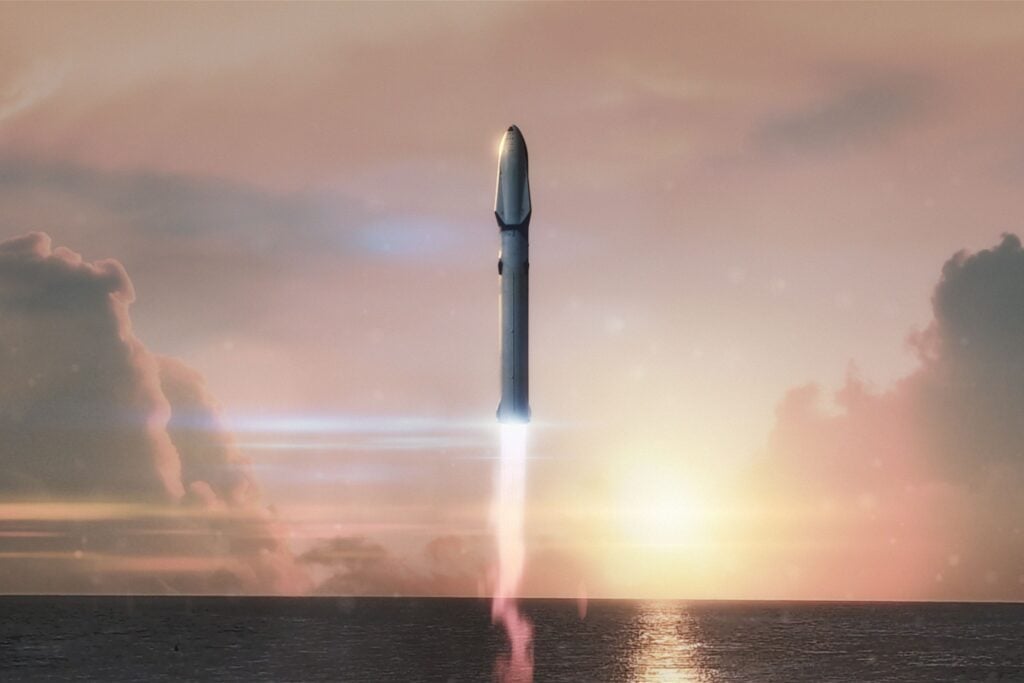
We have reached the point where Falcon 9 reuse can feel normal, which is a little absurd if we stop and think about it. In most launch eras, a first stage was used once and thrown away. With Falcon 9, the reuse loop is the core system. Launch, separate, land, inspect, refurbish, fly again.
B1081 is scheduled for its 25th mission on this flight. That matters because the hardest part of reuse is not the cinematic landing shot, even though we all still watch that bit like it is a final boss phase. The real win is turning recovery and turnaround into something predictable enough to support a launch calendar this dense.
This booster has already flown a mixed list of missions, including Crew-7, CRS-29, PACE, Transporter-10, EarthCARE, NROL-186, Transporter-13, TRACERS, NROL-48, COSMO-SkyMed Second Generation FM3 and 14 Starlink flights. That is a lot of different mission profiles on one piece of hardware: crew, cargo, Earth science, national security, rideshare and network deployment. We would call that an overworked main in a live-service game, except this one keeps clearing raids.
What happens after liftoff
The opening minutes are the part most of us watch closely, because Falcon 9 missions have a clean sequence that is easy to follow even if we are not aerospace engineers. The first stage does the brute-force early climb, then the second stage takes over once the vehicle is high and fast enough for the orbital work.
- Liftoff: Falcon 9 leaves Vandenberg carrying 24 Starlink satellites.
- Stage separation: The first stage separates from the upper stage after doing the heavy early push through the lower atmosphere.
- Booster landing attempt: B1081 targets a landing on Of Course I Still Love You about 8.5 minutes after launch.
- Upper-stage flight: The second stage continues toward low Earth orbit.
- Satellite deployment: The Starlink satellites are expected to deploy just under 62 minutes into the mission.
That landing attempt is always the most visible drama, but the satellite deployment is the actual mission objective. The booster can land perfectly and the mission still is not complete until those satellites are released where they need to be.
Starlink is already massive, and this keeps adding to it

Starlink is SpaceX’s broadband satellite network, and it is already the largest satellite constellation ever assembled. It currently has nearly 10,700 active units, and the number continues to climb as more Falcon 9 flights add batches to low Earth orbit.
This mission is also part of a very busy 2026 cadence for SpaceX. If it flies as planned, it will be the company’s 74th Falcon 9 launch of the year and the 59th Falcon 9 mission in 2026 dedicated to building out Starlink.
That pace matters because Starlink is not a one-and-done spacecraft program. Satellites in low Earth orbit need continual deployment, replacement and network expansion, especially when the business goal is wide-area broadband coverage rather than a single flagship spacecraft. For us watching from the ground, that means launches can start to blur together. For SpaceX, it means the operational rhythm is the product.
How this fits into SpaceX’s 2026 launch year
Falcon 9 is doing most of the lifting for SpaceX this year, but it is not the only vehicle the company has flown in 2026. On April 29, a Falcon Heavy launched the Viasat-3 F3 telecommunications satellite. SpaceX also launched Starship on its 12th test flight on May 22.
The contrast is useful. Falcon 9 is the mature platform, the one we judge by cadence, reuse and whether the mission timeline stays boring in the best possible way. Falcon Heavy fills the heavier-lift role, using three Falcon 9-derived first-stage cores for missions that need more performance. Starship is still in test-flight territory, with SpaceX presenting it as a fully reusable transportation system for future high-capacity missions.
| Vehicle | 2026 role mentioned here | What we should watch for |
|---|---|---|
| Falcon 9 | Frequent orbital launches, including Starlink deployments | Cadence, booster reuse, successful satellite deployment |
| Falcon Heavy | Launched Viasat-3 F3 on April 29 | Heavy payload missions beyond standard Falcon 9 capacity |
| Starship | Flew its 12th test flight on May 22 | Test progress, system reliability, future mission capability |
How to watch without missing the important bits
SpaceX typically posts live coverage through its official launch channels, and its main launch feed is the safest place to check close to liftoff. Since webcast coverage is set to begin about 10 minutes before launch, we do not need to camp out all evening unless we enjoy waiting screens. No judgment. We have all stared at a static countdown longer than we meant to.
If you are watching casually, here are the moments to keep an eye on:
- About T-minus 10 minutes: Webcast coverage should begin.
- T-0: Falcon 9 liftoff from Vandenberg.
- Several minutes after launch: Stage separation and the start of the booster return sequence.
- About 8.5 minutes after launch: Planned first-stage landing on the drone ship.
- Just under 62 minutes after launch: Planned Starlink satellite deployment.
Vandenberg is the right coast for this kind of trajectory because launches from California can head over the Pacific. The base, officially Vandenberg Space Force Base, is a major U.S. launch site for missions that need access to polar and other high-inclination orbits.
The sensible read
The headline number is 24 more Starlink satellites, but the more interesting systems story is B1081. A 25th flight attempt tells us a lot about the current Falcon 9 era. SpaceX is not merely proving that boosters can come back. It is working them into the regular production schedule, mission after mission, until the extraordinary starts feeling routine.
So yes, we can call this another Starlink launch. We would not be wrong. But if B1081 sticks the landing and the upper stage deploys the satellites on time, tonight gives us another clean data point in the larger Falcon 9 reuse story. For launch watchers, that is the good stuff, the kind of quiet progression we only notice if we keep reading the changelog together.