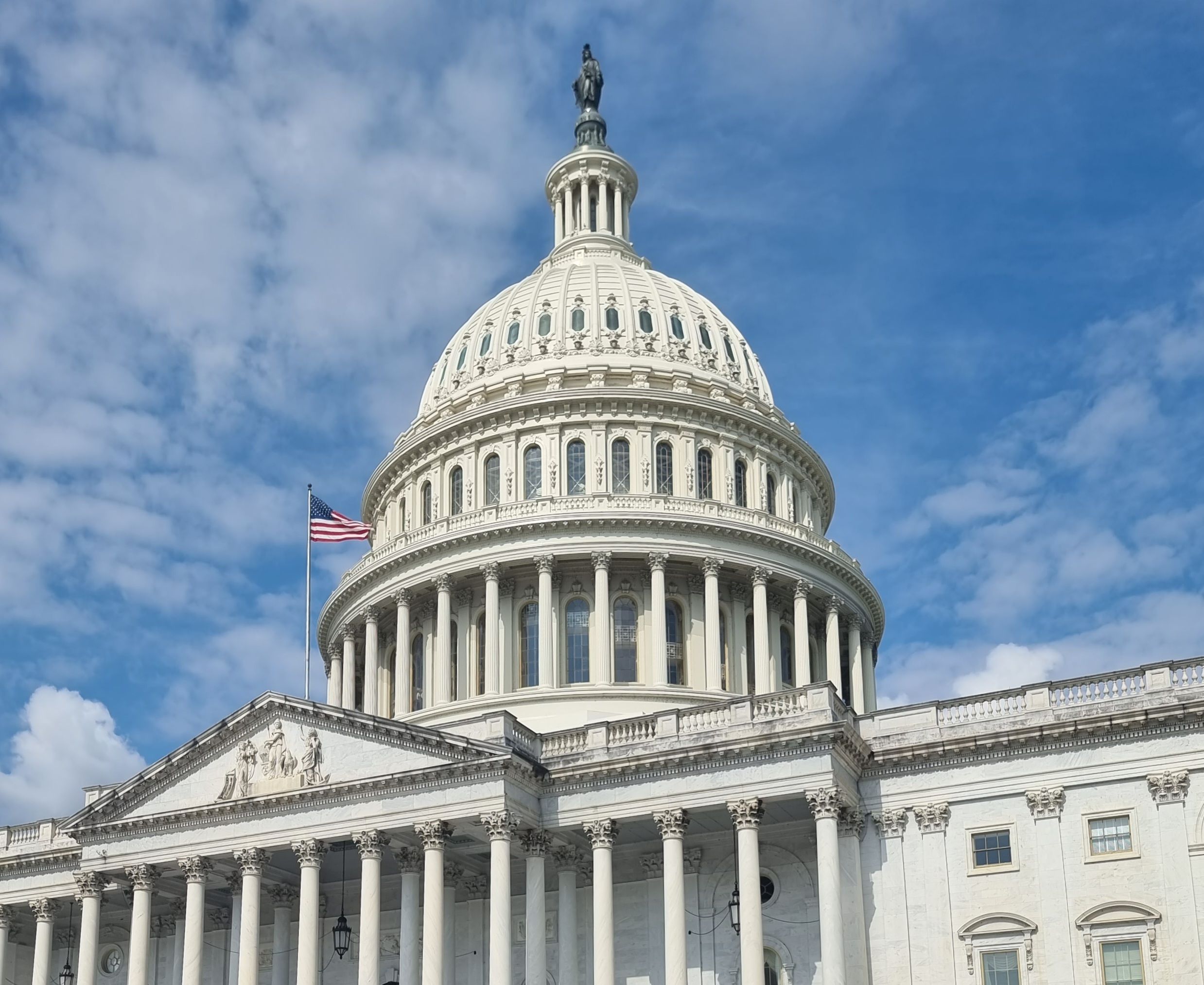
We’ve all seen this movie in Washington before: an industry discovers politics, writes big checks, hires experienced operatives, and decides it’s finally time to turn regulatory frustration into law.
That’s where crypto is right now. The CLARITY Act has become a measuring stick for whether the sector’s growing political muscle can produce something harder than headlines, namely a durable federal framework.
The catch, and it’s a big one, is that campaign spending alone does not pass a bill. Even if crypto’s influence is real, CLARITY still has to clear the part of the process where plenty of well-funded ideas go to stall.
Why the CLARITY fight matters
The basic stakes are easy to understand. Crypto firms, investors, and users have spent years dealing with uncertainty over which federal agency should police different parts of the market and how digital assets should be classified.
That uncertainty has not been academic. It affects how companies launch products, where they operate, what they disclose, and how much legal risk they carry. For us watching from the outside, this is the difference between an industry working under clear rules and one forced to interpret policy through enforcement actions and political signals.
CLARITY has drawn attention because it is tied to a bigger question: can Congress set a framework that reduces the tug-of-war between agencies such as the Securities and Exchange Commission and the Commodity Futures Trading Commission?
That’s why this debate lands beyond crypto diehards. It touches market structure, consumer protection, innovation policy, and the old Washington favorite, agency turf.
Big political spending changes access, not outcomes
The headline number around crypto’s political campaign is eye-catching, and that is part of the point. Large spending can buy attention, build relationships, and make lawmakers think twice before dismissing an industry as fringe.
We should be honest with ourselves here, though. Access is not the same thing as victory.
Campaign money can help put an issue on the agenda. It can help friendly members get elected. It can encourage lawmakers to learn the vocabulary and take meetings they might have ignored a few years ago. What it cannot do on its own is resolve policy disagreements that are still live inside Congress and across federal regulators.
That distinction matters because legislative fights usually break down on specifics, not slogans. Everyone likes “clarity” as a word. The trouble starts when members have to agree on where securities law ends, where commodities oversight begins, how decentralized a network must be, and what protections retail users actually get.
Washington runs on process, and process is slow on purpose
If we’ve learned anything from past tech policy fights, it’s that momentum can look stronger from the outside than it does inside the building. A bill can have donors, buzz, and industry backing and still get trapped in committee calendars, jurisdictional disputes, or leadership priorities.
That is especially true for crypto legislation, where lawmakers are not just weighing one industry’s wish list. They are also thinking about financial stability, investor safeguards, enforcement powers, and the political risk of looking soft after years of frauds and collapses in parts of the market.
Even members who want a framework may disagree on what kind of framework is politically survivable. Some will want narrower legislation. Others will prefer agencies to keep more discretion. Some will see a market structure bill as overdue, while others will treat it as a favor to an industry still trying to rebuild trust.
That means CLARITY’s path is less about whether crypto can get attention and more about whether it can hold a coalition together once the details get ugly. And yes, the details always get ugly.
What crypto’s influence actually looks like

Political influence is not just measured in campaign totals. It also shows up in staffing, issue education, trade group coordination, and the ability to frame a policy problem in terms lawmakers find useful.
For crypto, that means pushing the conversation away from a narrow enforcement lens and toward competitiveness, market structure, and keeping innovation in the United States. That framing has clearly gained ground in Washington compared with earlier years, when much of the discussion centered on speculation, illicit finance concerns, and spectacular company failures.
We can also see the shift in how often crypto policy now sits alongside other mainstream financial policy questions, instead of being treated as a novelty act. In Washington terms, that is real progress. Boring can be good. Boring means the issue is being absorbed into the normal machinery of lawmaking.
Still, influence has limits. The more crypto becomes a regular policy subject, the more it gets judged by regular legislative standards. Lawmakers start asking the same questions they ask every sector lobbying for favorable rules: who benefits, who takes the risk, what are the guardrails, and what happens when things go wrong?
The SEC and CFTC problem has not gone away
A lot of this fight turns on overlapping jurisdiction and the lack of a settled federal map. That part is not glamorous, but it is the engine underneath the entire debate.
If Congress wants to create clearer lines between securities oversight and commodities oversight, it has to define those lines in a way that regulators, courts, firms, and markets can actually use. That is harder than it sounds. Digital assets do not always fit neatly into legacy categories, and lawmakers know that any language they pass will be tested immediately by lawyers looking for edge cases.
We’ve seen this pattern before in financial regulation. Broad principles sound clean in a press release, then hit the real world and run into hybrid products, evolving business models, and incentives to structure around the rules. So even supporters of reform may push for careful drafting over speed.
That can frustrate an industry that feels it has waited long enough. But from Congress’s perspective, ambiguity in a market structure bill is not a small problem. It is the whole problem.
What could help CLARITY move
If crypto wants CLARITY to become more than a symbol, a few things matter more than another flashy spending headline.
- Broad coalition support: Backing from more than pure-play crypto interests helps lawmakers argue the bill serves markets, not just one lobby.
- Clear consumer protection language: Members who are skeptical of the industry will look for protections they can defend publicly.
- Reduced agency conflict: A bill that lowers rather than intensifies SEC-CFTC friction has a better chance of surviving scrutiny.
- Political timing: Leadership attention, committee bandwidth, and the broader congressional calendar can matter as much as policy merit.
- A cleaner industry image: Every fresh scandal makes the sell harder. Every period of relative stability helps.
None of that is especially glamorous, which is very on brand for Congress. The hard part is not getting people to say they want clarity. The hard part is getting enough of them to agree on what clarity costs.
What could still derail it
There are also several obvious obstacles, and we shouldn’t pretend otherwise.
- Partisan distrust: Even when there is cross-party interest in digital asset legislation, wider political tensions can swallow the issue.
- Competing priorities: Congress has a limited appetite for technically dense financial legislation unless leadership decides it is urgent.
- Regulatory pushback: Agencies and their allies may resist any measure seen as narrowing existing authority.
- Industry fragmentation: Not every crypto player wants the same rules, especially when business models differ.
- Public perception: Lawmakers still remember the damage done by earlier failures in the sector.
This is the part of the story that gets lost when spending totals dominate coverage. A large war chest can amplify a message, but it cannot erase policy tradeoffs or political memory.
So, will money get CLARITY over the line?
Probably not by itself. And if we’re being rigorous about it, that was never going to be enough.
The more realistic case for CLARITY is that spending helped crypto graduate from outsider status to serious participant status. That is a meaningful shift. It means lawmakers have to engage with the sector, not just posture about it. But serious participant status also means the industry now has to survive serious legislative scrutiny.
That is the test in front of CLARITY. Not whether crypto can attract attention, but whether it can translate influence into a bill that enough lawmakers view as technically credible, politically defensible, and worth floor time.
We’ve reached the stage where crypto’s Washington operation is no longer the novelty. Delivery is. If CLARITY advances, it will be because the bill answered enough hard questions, not because the lobby wrote enough checks. And if it stalls, that tells us something too: influence can open the door, but Congress still decides who gets through it.
Questions about where crypto fits under CFTC oversight are part of the same fight.