
We’ve all felt the shift by now. The hardware we used to grumble about for being pricey has started moving into a different category entirely, where even routine upgrades can feel hard to justify.
That matters for more than our wish lists. As component costs rise and major companies push higher prices onto finished devices, we’re being nudged toward a very old idea with a very modern use: keep what we have running for longer.
And honestly, for a lot of us, that may be the sanest response on the table. Repair it. Upgrade the part that failed. Buy refurbished when replacement is unavoidable. In other words, take back a little control over our own gear.
Why tech is getting more expensive
The immediate problem is upstream. Demand tied to AI infrastructure has put enormous pressure on the supply chain for advanced computing parts, especially the chips, memory, and storage that feed data centers and also end up in consumer devices.
The bottleneck is easy to understand even if the economics get messy. There are only a few companies making the components the entire industry depends on, and even fewer producing the most advanced chips. When demand surges across cloud infrastructure, consumer hardware does not get to live in its own little bubble.
Memory is a big part of that story. Kearney has warned that a global memory squeeze could last through 2030, which is the kind of timeline that should make all of us rethink the usual upgrade cycle. This is not a one-quarter blip that gets solved with a holiday sale.
We’re already seeing that pressure show up in shelf prices. Apple has raised prices across its lineup. Microsoft has increased the price of the 1TB Xbox Series X and pushed up pricing on newer Surface laptops. Valve’s Steam Machine has also landed at a much higher price than many people would have wanted, with Valve itself saying the figure was well above its target for the hardware.
The usual upgrade habit suddenly looks shaky
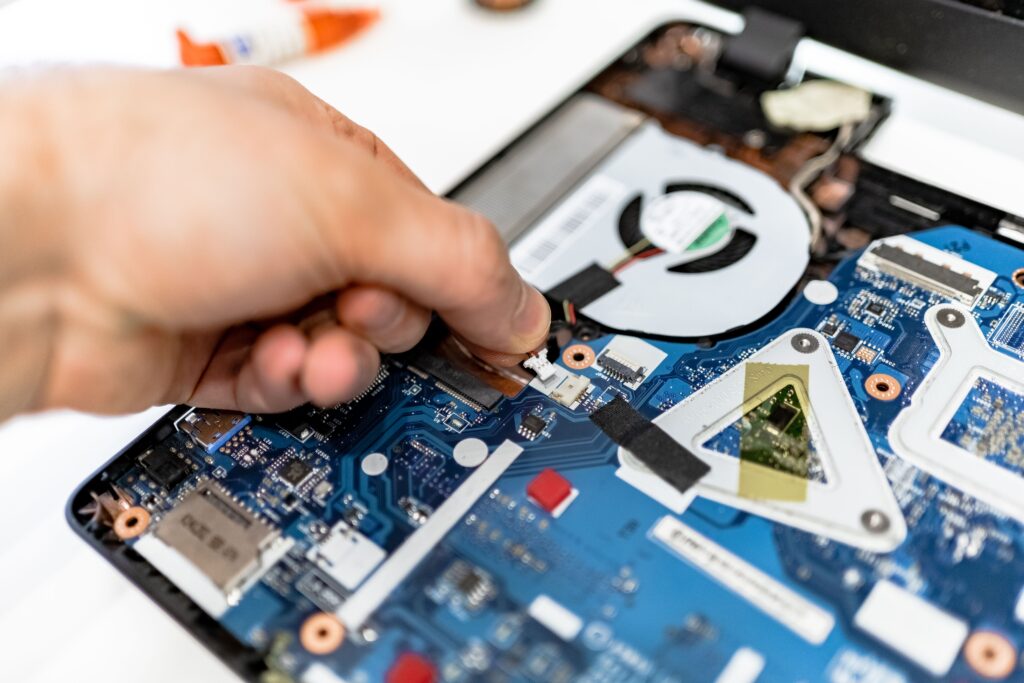
For years, the consumer tech rhythm was simple. Something slows down, something breaks, battery life gets annoying, and we replace the whole thing. The industry loves that model because it turns every inconvenience into a sales opportunity.
That approach looks a lot less comfortable when new devices jump in price while wages and household budgets are squeezed by everything else around us. Food costs, energy costs, and broader geopolitical instability are already doing enough damage. A pricier laptop or console upgrade doesn’t exist in isolation.
So here’s the question hanging over all of this: what if we just stopped treating replacement as the default answer?
Not forever. Not in some purity-test way. If your work machine dies and you need a new one, you need a new one. But if a battery is fading, a storage drive is full, a fan is noisy, or a screen component fails, we may be better off fixing the problem we actually have instead of buying an entirely different device.
Repair is less scary than the industry wants us to think
We’ve been trained, pretty effectively, to treat our own devices like sealed mystery boxes. Open one up and you’ll supposedly void something, break something, or awaken an ancient curse from the cable management gods. Conveniently, that fear lines up with the interests of companies that would prefer we replace than repair.
But the practical reality is often much less dramatic. Plenty of common failures are limited to one part. A battery wears out. A backlight fails. A single storage component goes bad. None of those problems automatically means the rest of the machine is junk.
The source material points to a few grounded examples that make the case well: replacing a broken TV backlight instead of scrapping the set, or sourcing a low-cost replacement part for a lawnmower rather than paying far more for a full repair or replacement. The lesson is not that every one of us needs to become a bench technician by next weekend. It’s that a lot of hardware problems are narrower than we assume.
That matters because fear is expensive. Once we stop assuming every fault is fatal, we start seeing more options.
Some devices are proving the point

Repairability is not a theory anymore. We can point to products designed around it. Fairphone has built much of its identity around phones that come apart far more easily than the average slab of glued-together glass. Framework has taken a similar approach with laptops, making modular repairs and part swaps central to the pitch rather than an afterthought.
Those examples matter even if most of us do not own either brand. They show that the tradeoff the industry often presents as inevitable, thin design versus repairability, is at least partly a business choice. Companies can make hardware easier to service when they want to.
Here’s the bigger takeaway for us:
- Repairable design reduces the cost of a single failure.
- Modular parts can stretch the useful life of a device.
- User access to components changes the math on upgrades.
- Even when we do not repair something ourselves, easier service usually helps independent shops too.
Policy is slowly moving in the same direction
This is not only a consumer habit story. Regulation is starting to matter more.
In 2024, Oregon became the first US state to ban parts pairing, a practice that can restrict the use of third-party replacement components. That kind of rule matters because it gets at a core frustration in modern repair: sometimes the issue is not the screwdriver work, it’s the software lock or authentication layer waiting on the other side.
Europe is also pushing in a more repair-friendly direction as part of a broader effort to reduce e-waste. Devices sold after February 18, 2027 must have easily replaceable batteries, which is one of those policy changes that sounds small until we remember how many products get discarded once battery health falls off a cliff.
We should be honest here, regulation is not a magic wand. It will not suddenly make every gadget delightful to service. But it does set a baseline, and right now that baseline matters a lot.
Refurbished gear may become the real value play
When repair is not viable, refurbished hardware starts looking a lot smarter than it did during cheaper upgrade cycles. That is especially true in categories where the annual model churn outpaces the actual day-to-day gains most of us feel.
Phones are the clearest example. Walk into almost any secondhand electronics shop and you’ll usually see plenty of used iPhones on hand. That is not just a sign of popularity. It is a sign that recent devices tend to retain enough usefulness to support a real afterlife in the resale market.
And let’s be honest with ourselves, a lot of us are not maxing out last year’s flagship, never mind this year’s. If the newest hardware comes at a premium inflated by supply constraints and industry-wide cost pressure, then buying a certified used device or a recent prior-gen model can be the more rational move.
| Option | Best for | Main upside | Main tradeoff |
|---|---|---|---|
| Repair current device | Single-part failures, battery issues, minor faults | Lowest replacement cost, less waste | May require time, tools, or a skilled shop |
| Upgrade a component | Storage, memory, or modular systems where supported | Extends device life without full replacement | Not possible on many sealed devices |
| Buy refurbished | When replacement is necessary but budget matters | Better value than buying new | Condition and warranty vary by seller |
| Buy brand new | Critical needs, unavailable repairs, long-term support priorities | Full warranty, latest hardware | Highest cost in a rising-price market |
What a make-do-and-mend mindset looks like in practice
We do not need to romanticize this. Repair is not always fun, and some companies still build products that seem personally offended by the idea of being opened. But there is a middle ground between helplessness and hobbyist obsession.
For most of us, it can start with a few simple habits:
- Pause before replacing a device and identify the actual failure.
- Check whether an independent repair shop can fix it economically.
- Look for official or third-party replacement parts where the device allows it.
- Consider refurbished hardware before buying new.
- Share repair knowledge and tools with friends or family when possible.
That last point matters more than it sounds. Repair confidence spreads socially. Once one person in a household or friend group learns how to swap a battery, replace a drive, or diagnose a common fault, the idea becomes less intimidating for everybody else.
Why this matters beyond our wallets
There is a bigger argument here than simple thrift. If consumers keep absorbing higher prices without changing behavior, companies have less reason to rethink repairability, less reason to support longer product lifespans, and less reason to ease off the replace-everything model that has defined modern tech for years.
That does not mean every price increase is cynical or avoidable. Some of this is plainly structural. Supply is constrained, demand is intense, and the AI buildout is competing for the same critical components consumer hardware needs. But our side of the equation still matters.
If we normalize repairing, buying used, and skipping unnecessary upgrades, we send a different signal about what kind of market we want. Maybe not a dramatic one overnight, but enough to matter over time.
We may need to relearn a few skills
The uncomfortable part is that some of those skills have been allowed to atrophy. A lot of modern tech culture is built around convenience, sealed hardware, trade-in programs, and annual refreshes. That ecosystem does not just sell devices. It quietly teaches us not to trust ourselves with them.
So yes, rising prices are a problem. But they may also force a healthier correction. Keep the laptop another year. Replace the battery in the phone. Buy the certified used model instead of chasing the fresh box.
We do not have to accept every expensive new gadget as the inevitable cost of staying current. If the industry is going to make new hardware harder to afford, we can answer by getting better at keeping the hardware we already own alive.