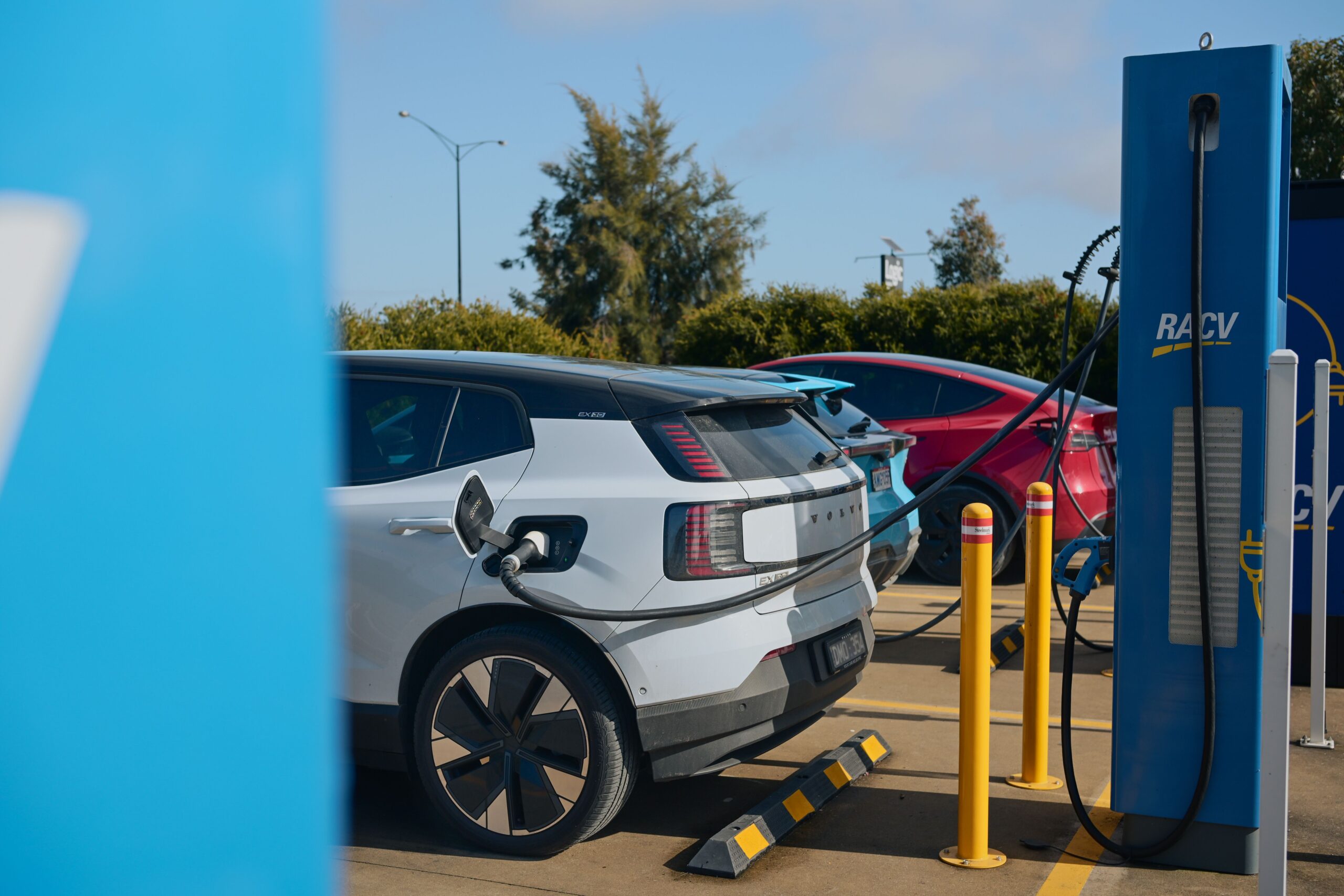
We’ve seen automakers spend years trying to localize production for the US, usually to dodge tariffs, qualify for incentives, or calm political pressure. So this one lands a little differently. Polestar appears set to lose access to the US market in 2027 even though it already builds the Polestar 3 in Ridgeville, South Carolina.
The reason is not where the SUV is assembled. It’s the federal Connected Vehicle Rule, which restricts vehicles that use certain software or hardware tied to China or Russia. And in Polestar’s case, local production does not seem to solve the problem.
That leaves us with a useful reminder: in the current EV market, supply chains and software origin can matter just as much as the badge on the hood or the factory on the map.
What changes in 2027
The US Department of Commerce’s Bureau of Industry and Security will not permit Polestar to sell new models in the country beginning in 2027. The restriction falls under the Connected Vehicle Rule, which bars the sale of vehicles containing software or hardware from China or Russia because of national security concerns.
The timeline matters here. The software restriction begins in 2027. The hardware restriction follows later, in 2030, unless a manufacturer receives authorization to continue selling vehicles in the US.
Polestar, which is majority-owned by Geely, has not received that authorization. As things stand, that leaves the brand effectively shut out of new US vehicle sales next year.
| Rule element | Timing | What it means |
|---|---|---|
| Software restriction | 2027 | New vehicles with covered software from China or Russia cannot be sold in the US without authorization |
| Hardware restriction | 2030 | Covered hardware from China or Russia also becomes barred without authorization |
| Polestar status | Current | No authorization has been granted for US sales under this rule |
Why the Polestar 3 is still affected

Here’s the part that makes this more than a simple import story. Polestar moved production of the Polestar 3 to South Carolina in 2024, a step that helped it avoid tariffs on EVs imported from China. US deliveries of that model also started in 2024.
Normally, we’d look at a domestic factory and assume the company found a durable path into the market. In this case, that assumption does not hold. The Connected Vehicle Rule is aimed at software and hardware sourcing, so a vehicle can still run into trouble even if final assembly happens in the US.
That means the Polestar 3’s South Carolina production footprint does not automatically protect it from the upcoming sales block. Polestar developed the 3 alongside Volvo engineering teams and parts sharing has been part of that process, but shared engineering doesn’t erase the need to show where critical telematics, update modules, and other connected systems come from.
What this says about today’s auto supply chain
We’ve reached the point where “made in America” is only one piece of the compliance puzzle. For connected cars, regulators are looking deeper into the tech stack, including where critical software and hardware originate and who controls them.
That matters because modern vehicles are packed with networked systems. Infotainment, telematics, remote services, sensor integration, and software-defined features all push cars closer to the consumer electronics model, just with two tons of metal wrapped around it. Once policy shifts to that layer, assembly location alone stops being a complete answer.
For automakers, this creates a much harder checklist:
- Where the vehicle is assembled
- Where key components are sourced
- Who develops or supplies connected vehicle software
- Whether regulators grant an exemption or authorization
We’ve been watching the industry chase tariff workarounds for years. This is a different kind of hurdle, and in some ways a nastier one, because software and electronics dependencies can be much harder to unwind quickly. The same logic that pushes firms to adopt new supply-chain tools and analytics is now being used to trace software provenance and dependency graphs, and that work can interact with broader corporate initiatives such as sustainability and procurement automation sustainability AI agents.
Why this is a particular problem for Polestar
Polestar’s ownership structure is central to the issue. The brand is majority-owned by Geely, the China-based automaker. Under the current federal framework, that appears to put Polestar on the wrong side of the authorization line for US sales.
And that’s what makes the timing rough. Polestar already invested in shifting production of the Polestar 3 to South Carolina in 2024, specifically to deal with tariff pressure on China-built EVs. In other words, the company already made one expensive adjustment to keep serving the US market. Now it may need an entirely different fix, and there is no sign yet that one is available.
It’s also unclear what Polestar does next. The company could continue US production for other markets, alter sourcing over time, seek future authorization, or rethink where it builds vehicles altogether. Right now, none of that is confirmed.
Volvo’s different outcome matters
One detail stands out. Volvo, which shares the same owner, did receive authorization for US sales.
We should be careful not to overread that on thin facts. The available information does not spell out why Volvo cleared the bar while Polestar did not. But the contrast matters because it shows this is not simply a blanket judgment applied to every brand linked to the same parent company. There are brand-level or product-level factors in play, even if we do not have the full regulatory reasoning yet.
| Brand | Ownership link | US authorization status mentioned here |
|---|---|---|
| Polestar | Majority-owned by Geely | Not granted authorization |
| Volvo | Shares the same owner | Received authorization |
What current and future buyers should know
If you’re looking at this from a buyer’s seat, the immediate point is narrow but important: the restriction concerns the sale of new models in the US beginning in 2027. The information available here does not say that existing Polestar vehicles would suddenly disappear from roads or that current owners would lose support. We should not assume either outcome without firmer detail.
What it does suggest is that anyone considering a new Polestar in the US may be dealing with a closing window, especially for vehicles that would be sold as new once the 2027 software restriction takes effect.
For shoppers, the practical questions now are pretty straightforward:
- Will Polestar secure authorization before 2027?
- Can the company change the relevant software or hardware sourcing in time?
- Will US production continue even if domestic sales stop?
- How will this affect future model plans in the American market?
We don’t have answers to those yet, and pretending otherwise would be how we end up reading dealer tea leaves like they’re patch notes. Never a good idea.
The bigger signal for the EV market
Polestar’s situation is a clean example of how EV competition in the US is being shaped by more than product quality, price, or factory location. Trade policy, industrial policy, and national security rules are all now part of the market map.
That means some brands can do the expensive part, build locally, and still get stopped by the invisible plumbing underneath the car. For consumers, it’s confusing. For automakers, it’s brutal. For regulators, it’s clearly intentional.
We’ll be watching what Polestar says about future US production and whether any path opens before the 2027 deadline. For now, the headline is simple: even a Polestar assembled in South Carolina may not be legal to sell in the US next year, and that’s a much bigger story than one brand’s bad luck. Markets are jittery enough that a single regulatory shock can ripple beyond one maker, and you only need to look at recent volatility to see how fast sentiment can swing market purge.