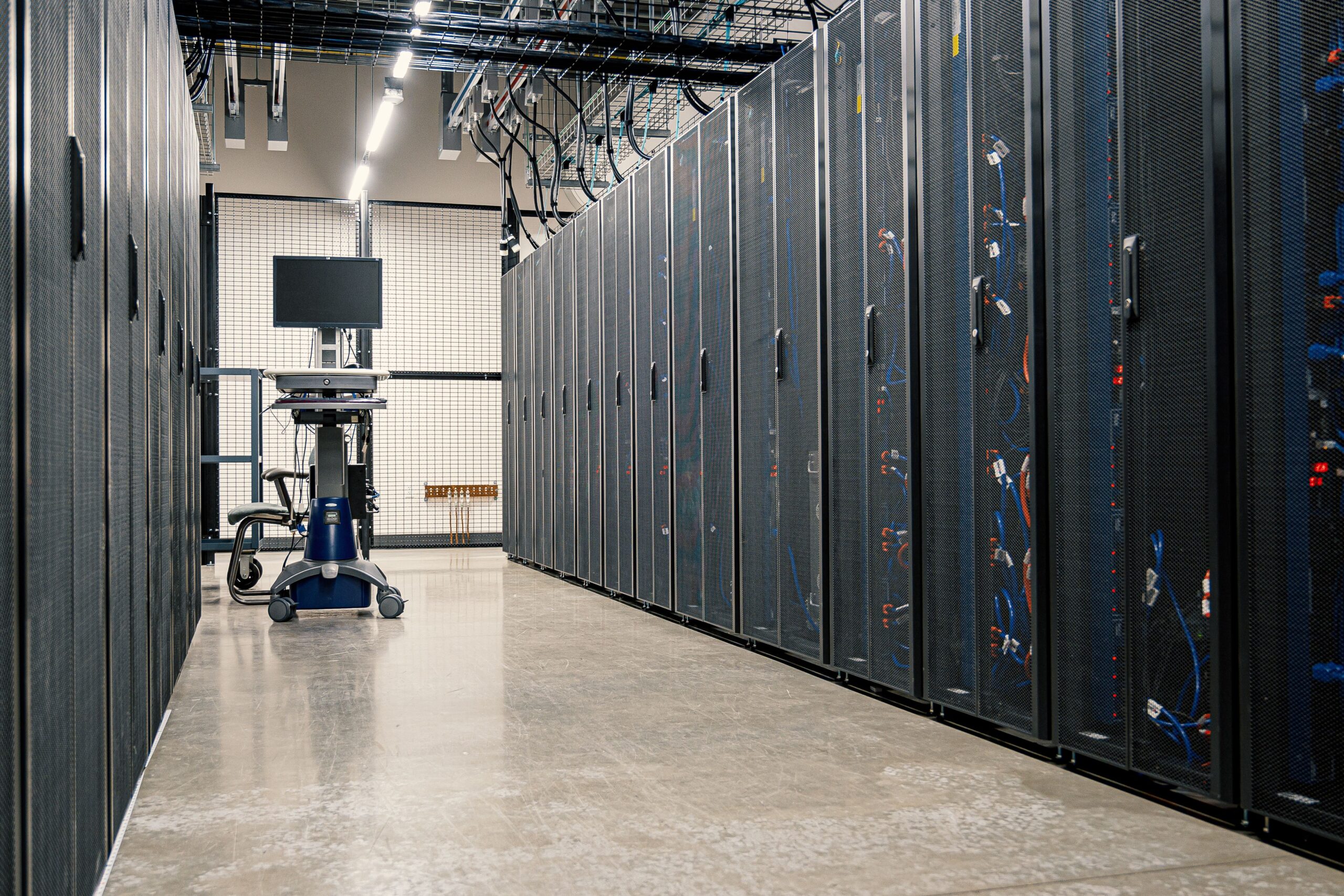
Okay, this sounds backwards until we stop picturing a server room as a refrigerator. NVIDIA says its newest Rubin-generation AI infrastructure can be cooled with liquid entering at 45 degrees Celsius, or 113 degrees Fahrenheit. That is warmer than a typical hot tub.
Yet the basic idea checks out. Cooling does not require ice-cold water. It requires a cooling medium that is cooler than the hardware producing the heat, plus a system capable of moving that heat somewhere else.
For data centers facing huge power, water and noise demands, the interesting part is not the hot-water headline. It is what higher-temperature liquid cooling could let us remove from the building around the servers, especially as operators chase the same efficiency pressures showing up across enterprise infrastructure and AI sustainability planning.
Why warm liquid can still cool a processor
AI processors generate substantial heat while operating, and that heat has to leave the chip reliably. In NVIDIA’s described setup, liquid circulates through cold plates that sit close to the processor hardware. The liquid absorbs heat, then moves through a closed loop to equipment that releases it outdoors.
NVIDIA says coolant can enter a fully liquid-cooled processor at 45 degrees Celsius and leave at roughly 55 degrees Celsius after taking on the chip’s heat load. The key detail is the temperature difference between the processor and the coolant, not whether the coolant would feel pleasantly warm to us. Modern AI racks are now being discussed in the 100 kW to 600 kW range for next-generation deployments, which is exactly why moving heat with air alone starts to look like bringing a desk fan to a boss fight.
That is a useful correction to the old mental image of a data center. For decades, facilities commonly spent energy chilling air, pushing it through equipment with fans, and trying to maintain cold aisles around racks. Air can do the job, but it is a comparatively inefficient way to transport heat. Liquid carries heat far more effectively, which is why direct-to-chip liquid cooling has become a major part of the conversation around dense AI systems.
The big shift is avoiding mechanical chillers
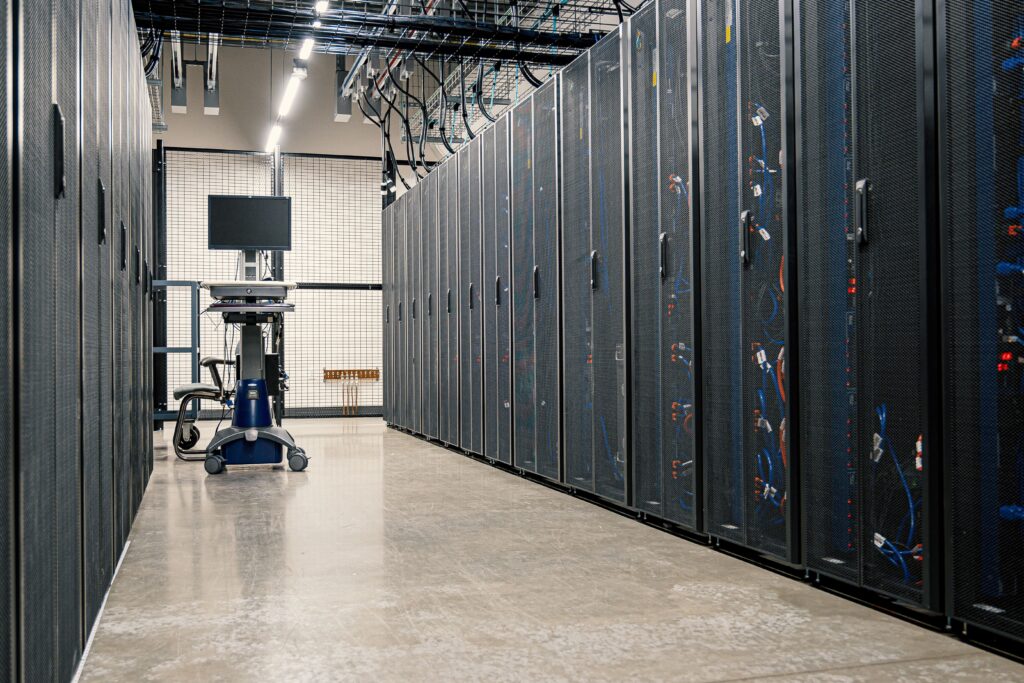
Higher coolant temperatures can make outdoor dry coolers viable for more of the heat-rejection work. Rather than using mechanical chillers to make water very cold, a facility can use outside air to pull heat from the liquid loop when local conditions allow it.
NVIDIA describes Rubin as fully liquid-cooled, without fans, cold aisles or the heavily chilled server-room model many of us associate with large-scale computing. Geography still matters. A facility in a hot desert cannot expect the same dry-cooling performance as one in a cooler climate, and operators will still have to design around local weather conditions.
But the direction is clear. If the system can safely work with hotter coolant, it has a larger window in which ambient outdoor conditions can do the job without compressor-driven chilling. That is where the potential savings begin to stack up. In a market where data center power demand is rising fast enough to pressure utility interconnection queues in multiple U.S. regions, cutting chiller dependence is not just an engineering flex, it is one of the cleaner ways to shave facility overhead.
What NVIDIA says could change
The company points to several practical consequences for large data centers. Some are operating-cost questions, while others are the sort of impacts neighbors and local utilities notice immediately.
- Lower cooling electricity demand: Cooling has historically represented as much as 40 percent of a data center’s electricity bill in older facility models, though many newer sites run lower than that. Industry estimates cited alongside NVIDIA’s approach suggest that increasing chiller temperatures by one degree can reduce cooling energy costs by about 4 percent.
- Potentially large savings at scale: For a 50-megawatt facility, the cited estimate works out to roughly $4 million in annual energy savings. That figure is an illustration of scale, not a promise for every site. At 50 MW, we are talking about the kind of campus load that can serve tens of thousands of U.S. homes, so even single-digit percentage gains matter.
- Less water consumption: Conventional cooling towers can consume about 2.6 million gallons of water per megawatt each year. NVIDIA says its 45-degree liquid-cooling architecture can reduce that figure to nearly zero by avoiding evaporative cooling and water towers. In drought-sensitive regions, that is the line item likely to draw the most attention from residents and regulators.
- Less noise: Cooling fans, generators and conventional cooling equipment all contribute to the familiar industrial roar of a data center. A liquid-focused design could reduce one of the louder parts of that package, which matters because community complaints around new data center projects increasingly focus on constant equipment noise along with power and water demand.
- More compact installations: NVIDIA says a system that previously needed six rack units can fit into two with the new design. Higher density is great for throughput, but it also means every design mistake gets concentrated faster, so the plumbing and heat-rejection side has to be right.
Water savings may be the part communities care about most
Power demand tends to dominate discussion of AI data centers, and fairly so. But water use is often just as important in places where supply is strained. Cooling towers work by evaporating water to carry heat away, which can be effective but creates an ongoing demand for water.
A closed-loop design that relies on dry coolers changes that equation. NVIDIA’s claim of nearly zero water use applies to the cooling architecture it describes, not to every form of water use connected to a data-center campus. Still, removing evaporative cooling from the core thermal design would be a meaningful change from the conventional tower-based approach, and it fits the broader push toward more measurable sustainability operations.
We should also keep the scope straight. New server infrastructure does not retrofit the huge installed base of existing data centers overnight. NVIDIA’s approach is a path for future builds and refresh cycles, where operators can design racks, plumbing and heat rejection together rather than trying to bolt a new cooling strategy onto a building made for cold air.
Density is forcing this conversation
The timing is no accident. AI systems pack expensive, power-hungry processors into increasingly dense racks. That density is great for compute capacity, but it makes traditional air cooling much harder to scale. At some point, blowing more cold air through more fans becomes an awkward answer to a heat problem that is fundamentally concentrated at the chip.
Direct liquid cooling moves the heat away at its source. It also lets the rest of the facility operate with fewer of the compromises required by cold-aisle designs, including room-scale air handling built around keeping everything colder than the chips actually need. Analysts now expect AI workloads to be a major driver of global data center electricity growth through the rest of the decade, which is why thermal design has stopped being a back-room facilities topic and become a board-level capacity question.
That does not make the infrastructure simple. Liquid loops require careful engineering, dependable connections and site-specific thermal planning. Nobody should read “warm water” and assume the hard part has vanished. We are trading one set of engineering demands for a system that could be far better suited to the thermal reality of modern AI hardware.
What to watch next
The meaningful test will be deployment at scale. NVIDIA’s Rubin platform suggests that liquid cooling is moving from a specialized option into a central architectural decision for AI data centers. Operators will need to prove the claimed savings across different climates, workloads and facility designs.
Still, the central point is hard to argue with: the coldest possible server room is not automatically the most efficient one. If we can move chip heat with 45-degree liquid, skip much of the chiller load and sharply reduce cooling water use, the old freezer-room model starts to look increasingly hard to defend.
No products found.