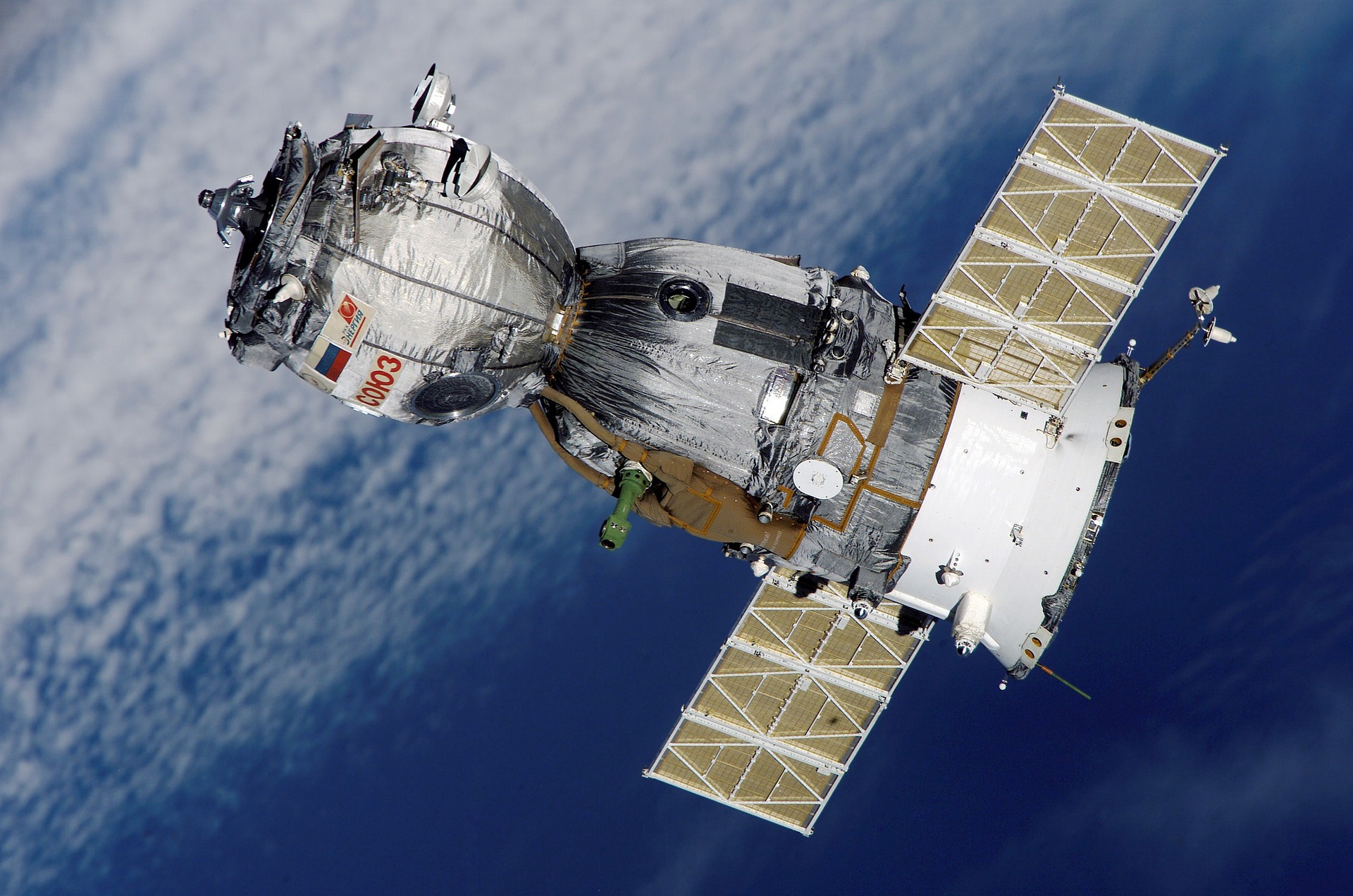
NASA gets a deadline as Washington sharpens its quantum strategy
The White House has put NASA on a clock. A new executive order, signed June 22 by President Donald Trump, tells the agency to deliver a five-year plan within 120 days for developing and extending civilian quantum sensing and networking for space applications.
That matters because quantum technology is moving out of the lab and into the kind of infrastructure governments care about most: navigation, sensing, timing, and secure communications. The order also pushes other federal agencies to outline their own five-year plans for turning atomic-scale physics into funded research and practical systems.
For space, the headline idea is simple. The government wants quantum tools that can work in orbit, support national security, and reduce dependence on systems that are vulnerable to jamming, disruption, or future attacks.
What the executive order actually sets in motion
The order, titled “Ushering in the Next Frontier of Quantum Innovation,” does more than ask NASA for a report. It creates deadlines, directs defense priorities, and establishes a new research effort called QC-ADDS, short for Quantum Computer for Application Development and Discovery Science.
QC-ADDS is meant to support the development of a quantum computer for scientific work, with the goal of delivering at least one such machine to a Department of Energy facility and, where possible, making it available to the broader scientific community.
The order also tells the Department of War to identify at least three next-generation quantum sensor projects within 60 days and prioritize them for fielding by Sept. 30, 2028. In practice, that gives the federal government a clearer timeline for deciding which concepts move from promising experiments to systems that can actually be used.
| Agency or effort | Task | Deadline or target |
|---|---|---|
| NASA | Submit a five-year plan for civilian quantum sensing and networking in space | 120 days |
| Department of War | Identify at least three next-generation quantum sensor projects | 60 days |
| Department of War | Prioritize projects for fielding | By Sept. 30, 2028 |
| QC-ADDS | Develop a quantum computer for scientific applications | Ongoing |
Why space agencies care about quantum now
The space angle is not theoretical. Quantum sensors can, in principle, measure extremely small changes in gravity and motion. That could help with navigation, Earth observation, and space situational awareness, which is the monitoring of objects and activity in orbit.
The executive order arrives alongside a wider push to protect sensitive data, critical infrastructure, and the digital economy from the risks posed by future quantum computers. That second order focuses on cryptographic protections, which are the systems used to keep data and communications secure.
Those two moves show the same basic concern. Governments are trying to prepare for a future where quantum systems are not just science projects but part of the security stack.
Industry players are already trying to build that future
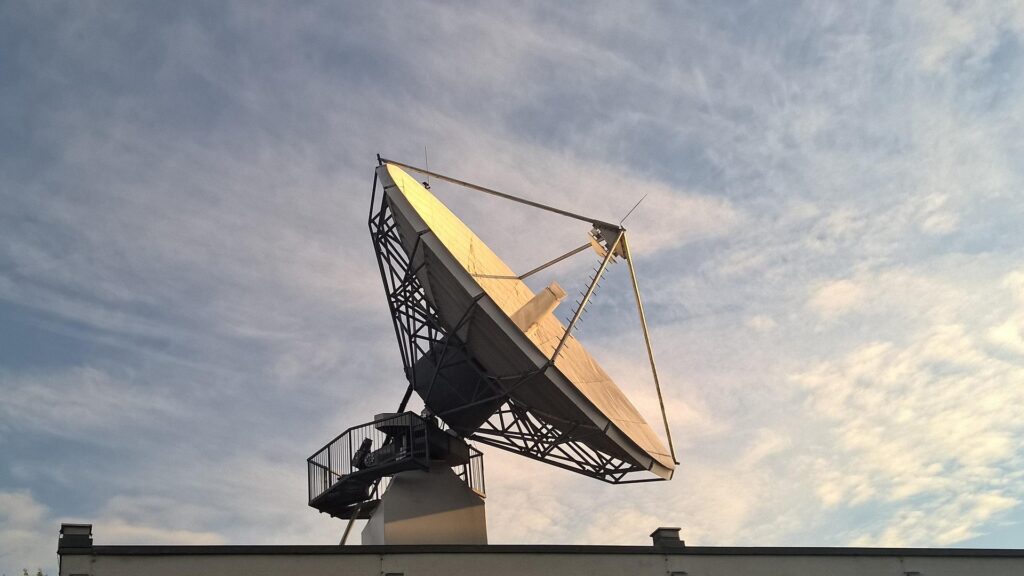
Shortly before the order, U.S.-based quantum technology firm Infleqtion announced America’s Quantum Space Initiative, an industry coalition meant to speed up the path from demonstrations to operational capability.
Founding partners include Voyager Technologies, Armada, Monarch Quantum, and the University of Colorado Boulder. The group is positioned as a way to connect the companies and researchers that need to solve different parts of the same problem, from getting hardware into orbit to making the supporting photonics and laser systems work.
Infleqtion has spent about a decade working with NASA and the Jet Propulsion Laboratory, including foundational work on the Cold Atom Lab, which launched to the International Space Station in 2018 to study quantum behavior in ultra-cold gases.
The hardware challenge is still the real bottleneck
The physics is no longer the main question. The harder part is engineering. Space hardware has to survive launch, tolerate radiation, and keep working without repair once it is in orbit.
That is why Kinsella described the remaining work as a systems engineering problem rather than a basic science one. In other words, the field already has the core concepts. What it needs now is reliable flight hardware and the partnerships to test it in space.
Infleqtion says it wants to deploy a quantum gravity gradiometer with NASA and JPL before the end of the decade. The device would measure tiny changes in gravity from orbit, which could improve space situational awareness and add data about what is happening on and below Earth’s surface.
What the article says quantum space tech could affect first
- Navigation and timing
- Gravity sensing from orbit
- Secure communications
- Space situational awareness
- Data collection for Earth and orbital environments
Why the timing matters geopolitically
The international race is part of the story too. Kinsella pointed to China’s heavy investment in quantum communications, especially encrypted links between Earth and space. That raises the stakes for anyone trying to protect satellite networks and military communications in a more contested orbital environment.
There is also a practical military concern. If GPS or communications were knocked out in a conflict, the United States and its allies could face serious vulnerabilities. The pitch for quantum sensors is that they could help recreate navigation capability with far greater precision and resilience when used alongside Earth-based systems.
That is a long-term promise, not a finished product. Kinsella said quantum computers themselves are still further down the road for space use. For now, sensing and timing appear more likely to mature first.
| Quantum application | Near-term outlook | Why it matters |
|---|---|---|
| Quantum sensing | Likely first to mature in space | Precision measurements for navigation and observation |
| Secure communications | Expected to follow | Improved timing and data protection |
| Advanced atomic clocks | Expected to follow | Better timing and navigation support |
| Quantum computers in space | Later-stage possibility | Still needs usefulness on Earth first |
What to watch next
The most immediate checkpoint is NASA’s 120-day deadline. That plan should show how the agency wants to approach civilian quantum sensing and networking in space, and which problems it sees as most urgent.
After that, the next big test will be whether these federal plans line up with what industry can actually deliver. The initiative announced by Infleqtion and its partners suggests the answer may depend as much on coordination as on invention.
For now, the message from Washington is clear: quantum is no longer being treated as a niche research topic. It is being folded into space policy, defense planning, and data security at the same time.