
We all know the point where summer stops feeling like a pleasant excuse to be outside and starts feeling like a survival game with bad checkpoint placement. A box fan can still do useful work, sure, but a few newer gadgets tackle more specific problems: hot bedrooms, sun-blasted windows, humid rooms and long days away from a wall outlet.
The sensible move is to match the device to the heat problem we actually have. Cooling a small room, moving air across our face and keeping afternoon sun out of the house are very different jobs, and no single gadget wins all three. That part matters more than ever, because the last 12 months were the hottest on record globally, and a lot of us are shopping for relief instead of novelty.
Here are eight options that stand out for their stated features, with the caveat we should always check room size, power needs and local installation rules before spending serious money.
1. EcoFlow Wave 3 portable air conditioner
A portable air conditioner is the heavyweight option here. The EcoFlow Wave 3 is designed to cool or heat without a permanent whole-home installation, which makes it potentially useful in a cabin, campervan, small workspace or a room where the main HVAC system is not doing enough.
Its optional 1,024Wh battery module is the important wrinkle. That can keep the unit operating during an outage, though the available runtime depends heavily on the chosen mode. EcoFlow says the battery can last up to eight hours in Eco mode, while regular cooling use will drain it faster. The company also claims a 15-degree Fahrenheit temperature reduction in 15 minutes.
We need to be realistic about what portable AC can do. If it is used indoors, both hoses need to vent outside. Skipping that part undermines the unit’s efficiency because the machine has to manage air pressure as well as temperature. That is not just theory, either. Single-hose portable units generally test worse than dual-hose designs because they can pull conditioned indoor air out of the room as they exhaust heat. At $1,499, or $1,449 at Walmart, it is a specialized purchase rather than a casual impulse buy.
2. JisuLife Neck Fan
For the commute, dog walk or a sweaty stretch of outdoor errands, personal airflow can matter more than trying to cool everything around us. The JisuLife Neck Fan sits around the neck and uses a bladeless layout with 78 air outlets intended to spread air around the head and face.
It has five speed settings and is rated for around four hours of typical battery life. That should cover a short outing, but max speed means more noise right next to our ears. This is probably better reserved for a walk, festival queue or outdoor work than a quiet shared office.
The JisuLife model has a 4.2-star average across more than 62,000 Amazon customer ratings. Its listed price is $33.99 on Amazon, with Walmart pricing starting at $34.99. The broad sentiment is about what we’d expect at this price: plenty of people like the hands-free airflow, and plenty of others complain that neck fans can feel bulky, louder than expected, or weaker outdoors once the air itself gets truly brutal. If you want more options in this category, our roundup of neck fans that could help beat the heat is a good companion read.
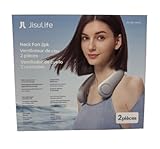
Jisulife Neck fan- Hands free 2 Pack
3. Dyson HushJet Mini Cool
The Dyson HushJet Mini Cool takes a more conventional handheld route, even if its bladeless design keeps the look a little more sci-fi than a drugstore desk fan. It weighs 7.5 ounces, has five speeds, a lanyard for hands-free positioning and a claimed maximum battery life of six hours.
Its boost mode pushes air at up to 55 miles per hour, which is the sort of specification that sounds great until we remember that moving lots of air makes noise. At maximum output, it has been measured at about the level of a vacuum cleaner. We would use lower settings on transit or indoors, then save boost for outside. It sells for just under $100.

TUOOUT Silicone Protective Case for Dyson HushJet™ Mini Cool Portable Fan-Black
4. Bluetti Multicooler
Cool drinks are nice. Keeping food cold during a road trip or power interruption is a much more practical reason to consider the Bluetti Multicooler. This 42-quart, dual-zone electric fridge-freezer can reach minus 20 degrees Fahrenheit and includes a dedicated compartment for making ice.
Bluetti says it can produce clear ice cubes in as little as 25 minutes. It can run from AC power or a 12-volt car socket, and it supports the company’s modular battery system. With a B70 power module, Bluetti says it can run for up to three days in standard refrigerator mode, or continue operating with a compatible 200-watt solar panel.
The Multicooler costs $699 directly from Bluetti, before any battery packs. That price puts it firmly in the camping, extended-travel and outage-preparation camp. For a picnic or an afternoon at the park, we can safely keep using a normal cooler and spend the difference on ice. It makes more sense next to the broader category of wearable and travel-focused summer gadgets than as a casual backyard splurge.

BLUETTI Home Integration Kit for Connecting 1 Set of AC500&B300S Portable Power Station w/Main Panel to Build up a Max 6144Wh / 120V / 5000W Backup System
5. Smart curtain and blind controls
The cheapest cooling improvement often starts with blocking direct sun before it turns a room into an oven. Smart curtains and blinds help automate that routine, so we do not need to remember to close every window covering at exactly the right time.
The SwitchBot Curtain Opener is a retrofit option for curtain poles and tracks, which makes it relevant for renters and anyone avoiding a full window-treatment replacement. The third-generation unit is listed at $99.99 with a solar panel, and a pair of curtains generally needs two units.
For existing blinds, the SwitchBot Blind Tilt is listed at $69.99. SmartWings blackout blinds are the more complete replacement route, starting at $179.99 and built to a buyer’s window dimensions. Available motor options include Zigbee, Z-Wave and Matter. Matter support is useful if we want a smart-home device that can work across different compatible platforms instead of becoming another isolated app on the phone. This is also one of the few upgrades here that can cut cooling load before we even touch the thermostat, which is why window shading keeps showing up in utility efficiency guidance year after year.
6. BedJet 3 bed cooling system
Hot nights are their own kind of misery. We can tolerate a warm afternoon with a cold drink and a fan, but trying to sleep while the room refuses to cool down is where summer really starts winning.
The BedJet 3 takes an air-based approach. It sits beneath the bed and sends forced air through compatible bedding to regulate temperature. Unlike water-circulating mattress systems, it avoids the plumbing and maintenance concerns that come with moving water around a bed.
The tradeoff is that it does not include sleep sensors or a broader smart-sleep platform. For some of us, that will be a feature rather than a missing checkbox, especially since there is no subscription commitment tied to advanced functions. A single-zone BedJet 3 with a king-size Cloud Sheet is listed at $749 on Amazon. If your bigger issue is heat on the move instead of heat in bed, the overlap with travel cooling gear and wearables is worth thinking about before dropping this much cash.
7. Shark FlexBreeze Pro Mist
Misting fans make sense outdoors because they combine airflow with a fine water spray, using evaporation to help cool us down. The Shark FlexBreeze Pro Mist can work as a pedestal or desktop fan and adds a water reservoir and pump to the standard FlexBreeze setup.
Shark says the fan can lower temperatures by up to 12 degrees Fahrenheit when ice is added to its tank. It also claims a 70-foot airflow range and up to 12 hours of battery life. Those are attractive numbers for a patio, tailgate or outdoor work area, but this is not a device we would casually run in a living room unless damp furniture sounds like a good side quest. The catch with any misting setup is humidity. In dry heat, evaporation does real work. In already muggy air, the payoff drops fast and we mostly end up feeling wetter.
Pricing starts at $199.95, depending on color. The core limitation is obvious: its misting function is built for outdoor use.

12V Replacement Charger for Shark FlexBreeze Outdoor Fan Compatible with FA222 FA222WH FA302 FA302WH FA300 FA200 FA225 FA201 FA202 FA220 UH205 FA150 FA151BRN Series Cordless Portable Mist Fan
8. Nest Learning Thermostat, 4th Gen
The Nest Learning Thermostat does not create cold air. What it can do is manage a compatible heating and cooling system with more awareness of routine, humidity and outdoor conditions than a basic thermostat.
Its Natural Cooling feature can pause air conditioning when cooler evening conditions could help, then remind us to open the windows. In humid climates, Cool to Dry can use a heat pump or air conditioner to reduce humidity without requiring a dramatic temperature drop. That matters because humidity can make a room feel worse even when the thermostat number looks reasonable.
The fourth-generation Nest Learning Thermostat is available in silver, gold and obsidian, with Amazon pricing starting at $279.99 and Walmart pricing from $220. It makes the most sense for households with compatible whole-home HVAC, not for an apartment with a window unit and a landlord who thinks insulation is an optional DLC. If you want the giant-scale version of this same problem, our piece on how Nvidia is thinking about cooling in 45C data center conditions is a fun reminder that everybody is losing arguments with heat right now, just at very different budgets.
Pick the tool for the problem in front of us
We do not need all eight of these gadgets. Most of us need one or two that address the hottest, most frustrating part of our routine.
- For a small space without central cooling, look first at a properly vented portable AC.
- For errands and outdoor time, a neck fan or handheld fan is the easier carry.
- For sunny rooms, automated blackout blinds or curtains can reduce heat before it builds up.
- For camping, road trips or outage planning, the powered cooler earns its price only if we will use its battery and refrigeration features.
- For unbearable nights, a bed-focused air system may be more targeted than lowering the thermostat for the whole home.
Summer gear gets expensive quickly, so we should start with the constraint we cannot solve by closing curtains, drinking water or waiting for sundown. Get that one right, and we can spend less time losing arguments with the thermostat and more time getting through the heat together.