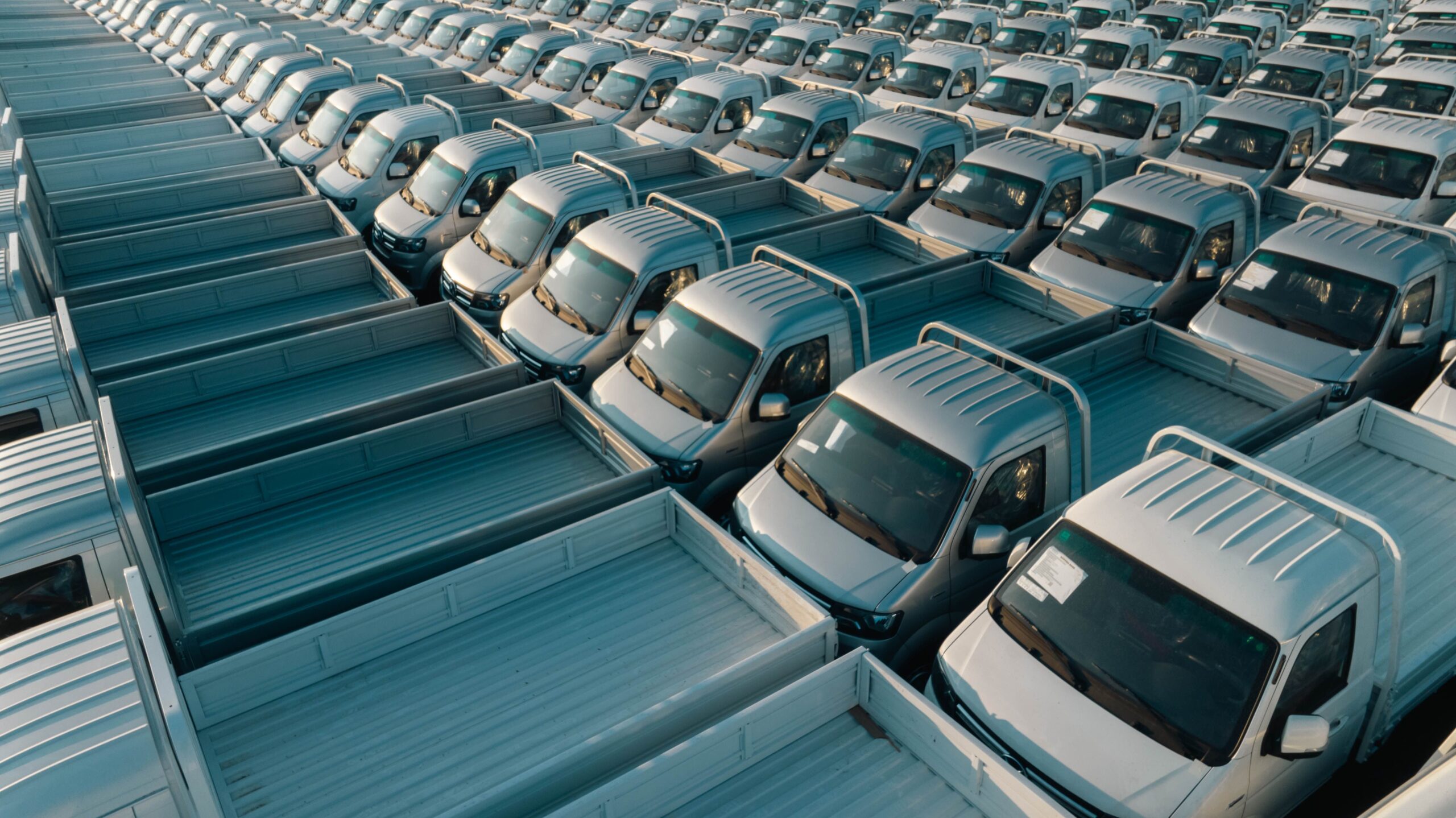
Slate Auto is trying to pull off the part of EV startup life that usually gets skipped in the pitch deck: making money.
The company is opening preorders for its modular electric pickup truck, which starts at $24,950, and says every vehicle it builds will be gross margin positive. That is a bold line in a market where plenty of recent EV startups have burned through cash, cut staff, or gone under before ever getting to scale, and we have all seen how quickly the spreadsheet math can stop looking cute.
CEO Peter Faricy says the company’s goal is to reach positive free cash flow and earnings before taxes, depreciation and amortization by 2027. That is still a long runway, and he is not pretending otherwise. The company is also continuing to raise money as it prepares to begin customer deliveries later this year and ramp production next year.
Why Slate thinks its math works
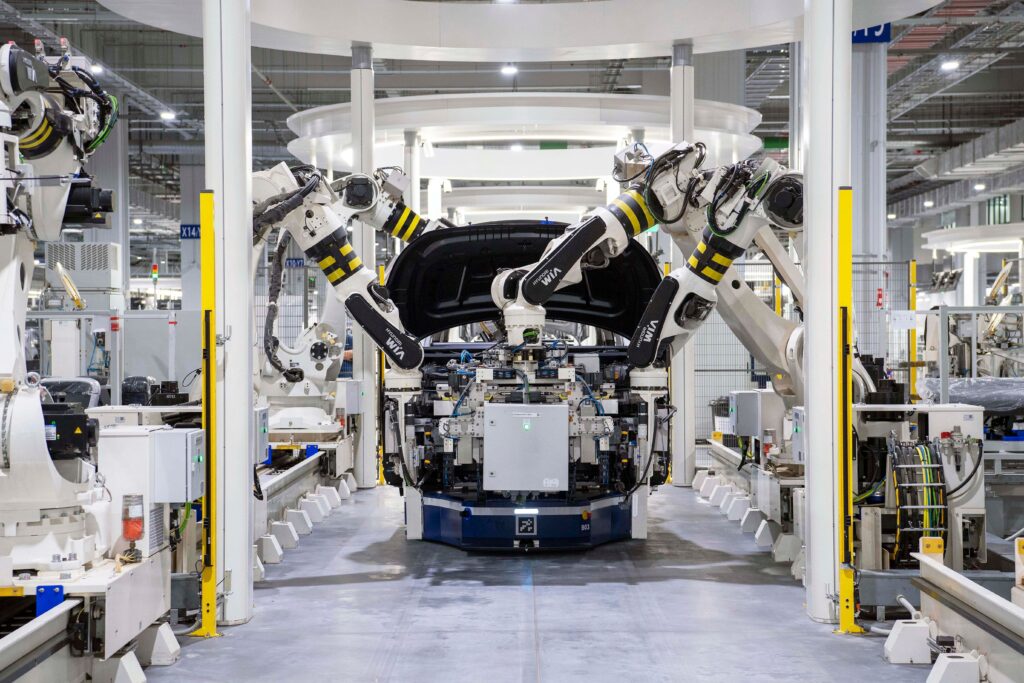
The pitch rests on a simple idea: keep the vehicle simple, keep the factory simpler, and avoid a lot of the expensive complexity that has tripped up other automakers. Faricy says Slate has a different cost structure and business model from traditional car companies, and that the break-even point is around 80,000 vehicles a year.
That matters because the company says its assembly plant in Warsaw, Indiana is planned for 150,000 units of annual capacity. In other words, if Slate gets anywhere near its own targets, it believes there is room to build volume without needing every truck to carry a giant margin burden. That is the kind of setup we usually only get to judge after the first real production runs, not before the first wave of customers is even in the door.
| Slate target | What the company says |
|---|---|
| Starting price | $24,950 |
| Gross margin | Positive on every vehicle |
| Break-even volume | About 80,000 vehicles per year |
| Planned plant capacity | 150,000 vehicles per year |
| Delivery timing | Fourth quarter for expected deliveries |
That is the kind of table we usually only get to build after a company has proven itself. Here, we are still very much in the promise stage, which is why the execution details matter so much.
The truck itself is designed to stay cheap by staying plain
Slate’s flagship vehicle is a two-seat, rear-wheel-drive electric pickup with a stated range of 205 miles, 181 horsepower, and 195 pound-feet of torque. It is basic in a way that feels almost defiantly old-school. The speakers are optional, the windows are crank-operated, and there is no big infotainment screen in the middle of the dash.
Instead, Slate says drivers can use their own phone or tablet for navigation and music. The exterior is not painted, either. The company says the body is engineered for vinyl wraps, which avoids the need for a paint shop, one of the most expensive parts of an auto plant.
For the full launch, Slate says it will offer more than 100 standard wrap colors for under $500, plus more than 175 accessories, with over 80 of them priced under $500. That is where the company’s pitch starts to look less like a stripped-down fleet vehicle and more like a modular platform built around personalization, which is probably the smartest part of the whole package.
Products and trims Slate is leaning on
- Slate electric pickup truck, the base two-seat model starting at $24,950.
- Slate SUV configuration, which can be converted from the pickup into a five-passenger SUV for an extra $5,000.
The company also says customers will be able to choose different covers and tops, including fastback and squared-off styles that can give the vehicle a look closer to a Jeep Wrangler SUV. That flexibility is the whole point of the product, so it is less a single vehicle than a platform with a lot of possible identities.
There is real business risk here, and Slate knows it
We have seen this movie before. Lordstown Motors and Fisker Automotive both ended up bankrupt, while Rivian Automotive and Lucid have each reported billions in annual losses and both recently announced layoffs. Slate is trying to talk its way around that history by arguing that it is not building a conventional EV at all.
The company has raised more than $1.3 billion through three financing rounds. Two of those rounds were led by Mark Walter’s TWG Global investment holding company after a Bezos-affiliated lead round. Slate also says it has more than 180,000 reservations, though those reservations were backed by refundable $50 deposits, while the actual preorder phase comes with a $300 nonrefundable down payment.
That detail is worth pausing on. Reservations tell us there is interest. Preorders tell us people are willing to commit a little harder. Production and delivery tell us whether the economics were real or just well packaged.
What makes Slate unusual in the pickup market
The truck’s two-door body style is a big part of why it stands out. In the U.S., it will be the only pickup truck or SUV on sale that offers only a two-door version without a four-door option alongside it. Slate has not ruled out four-door models later, but for now the lineup stays narrow.
It is also rear-wheel drive only, which keeps the hardware simpler but places it in a more limited segment than many modern pickups. That makes the product easier to explain and, Slate hopes, easier to build profitably. It also means we should be honest about the tradeoffs. This is not trying to be everything to everyone.
| Attribute | Slate pickup | Typical modern small pickup |
|---|---|---|
| Doors | Two-door only | Usually four-door |
| Drive layout | Rear-wheel drive | Often all-wheel drive or four-wheel drive available |
| Infotainment | No large built-in screen | Integrated central display is common |
| Body finish | Wrap-ready, no paint shop | Painted bodywork |
| Starting price | $24,950 | Generally higher, depending on trim |
That comparison is the heart of Slate’s strategy. The company is betting that some buyers will trade away range, luxury, and complexity in exchange for a lower price and more customization. That is a risky bet, but it is at least a clear one.
The bigger question is whether the market wants this much simplicity
Slate was in stealth mode until it revealed its vehicle in April 2025, and the company says the project has been in development for more than three years. Faricy, a former Amazon Marketplace executive, was brought in to help steer the business through the next stage as it moves from prototypes and hand-built units toward normal production.
The company says it is building about three vehicles a day right now while it works through federal validation and certification. It hopes to begin operating the factory through its normal production processes by August. Those are the kinds of milestones that matter more than launch-event polish.
Faricy did not rule out taking the company public, but he suggested that 2027 would be too early in his view. For now, Slate is focused on getting actual trucks onto actual driveways. That is still the part where a lot of EV startups find out the hard way whether the numbers were ever going to work.
Slate’s pitch is not subtle. Build a cheaper vehicle, simplify the factory, lean into customization, and keep the company inside its margin line before the market can chew it up. We will know soon enough whether that is a clever workaround or just the latest EV startup story trying to outrun gravity.