Notion has launched a new Developer Platform designed to help teams connect more data, build custom automation, and bring more AI agents directly into the workspace.
In a post published May 13, 2026, Max Schoening, Notion’s head of product, said the platform is built to extend what Custom Agents can already do and make Notion a place where developers and agents can work side by side.
What’s new in Notion’s Developer Platform?
The rollout adds several pieces aimed at teams that want more control over workflows, data, and agent behavior. Notion says the platform includes Workers, External Agents, an External Agent API, and a command-line tool called ntn.
According to the company, the new tools are meant to help teams move beyond basic automation and create more reliable, connected workflows inside Notion.
- Workers: custom code deployed to Notion’s hosted runtime
- External Agents: partner agents that appear inside Notion
- External Agent API: a way to bring your own agents into Notion
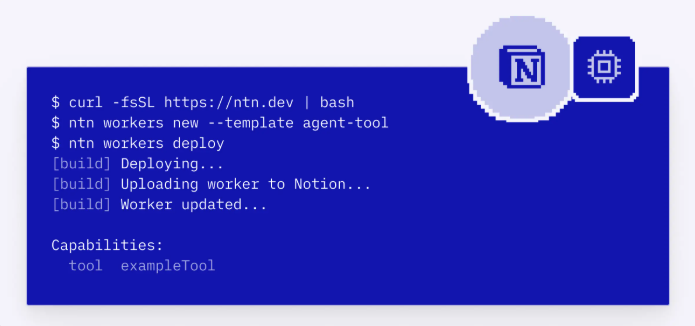
- CLI (ntn): a terminal and IDE-based tool for developers and coding agents
Workers bring custom code into a hosted runtime
One of the biggest additions is Workers, which let developers deploy custom code to Notion’s hosted environment without managing outside infrastructure.
Notion says Workers can be used for database sync, custom agent tools, and webhook triggers. The company also says they are available now in public beta on Business and Enterprise plans, and are free to use through August.
| Feature | Status | Availability |
|---|---|---|
| Workers | Public beta | Business and Enterprise plans; free through August |
| CLI (ntn) | Available now | All plans |
| External Agents | Waitlist | Private beta |
More data, more context for teams and agents
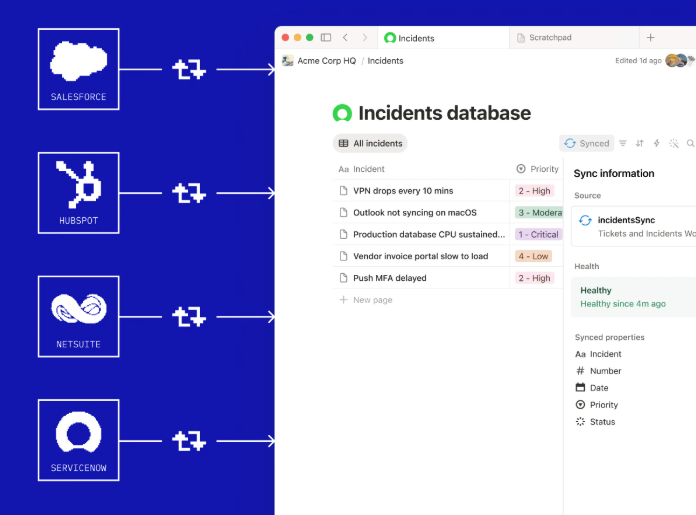
Notion says fragmented information across tools has been a major problem for teams trying to use agents in real work. The new platform aims to help by syncing data from external systems such as Zendesk, Salesforce and Postgres into Notion databases.
The company says that keeps data fresh automatically and gives both people and agents access to the same shared context inside Notion.
That matters for teams building workflows around customer support, sales, operations or internal systems, where stale data can quickly make automation less useful.
External agents and the CLI broaden access
Notion is also opening the door to agents that already live outside its product. The company says External Agents can show up in the agent list, chat directly in Notion, and take actions alongside team members.
Notion names Claude Code, Cursor, Codex and Decagon among the partner agents available at launch, with more promised later. The External Agent API is intended to let companies connect their own internal agents too.
For developers, the ntn CLI is positioned as the main control point. Notion says it can authenticate in one line, read and write to Notion, and manage and deploy Workers from a terminal or IDE.
Governance is part of the pitch
Notion is also emphasizing control and oversight. The company says authentication, permissions and sandboxing are built into the platform from the start.
It describes a progressive trust model, where teams can begin with human review on every action and increase autonomy over time. Notion also says all agent activity appears in the same workspace so teams can see what ran, who approved it and what it did.
Workers run in a hosted sandbox with defined permissions, which Notion says is meant to keep deployments isolated.
Why this matters for Notion users
For travel teams, media teams, startups and larger businesses already using Notion as a workspace, the new platform could make the app more useful as a central hub for operations and AI-driven tasks.
Notion says teams have already built more than 1 million Custom Agents, and it expects the new platform to push that further by helping agents connect to more systems and take on more practical work.
The company says it is building the platform in the open and invites users to read the docs and install the CLI now.