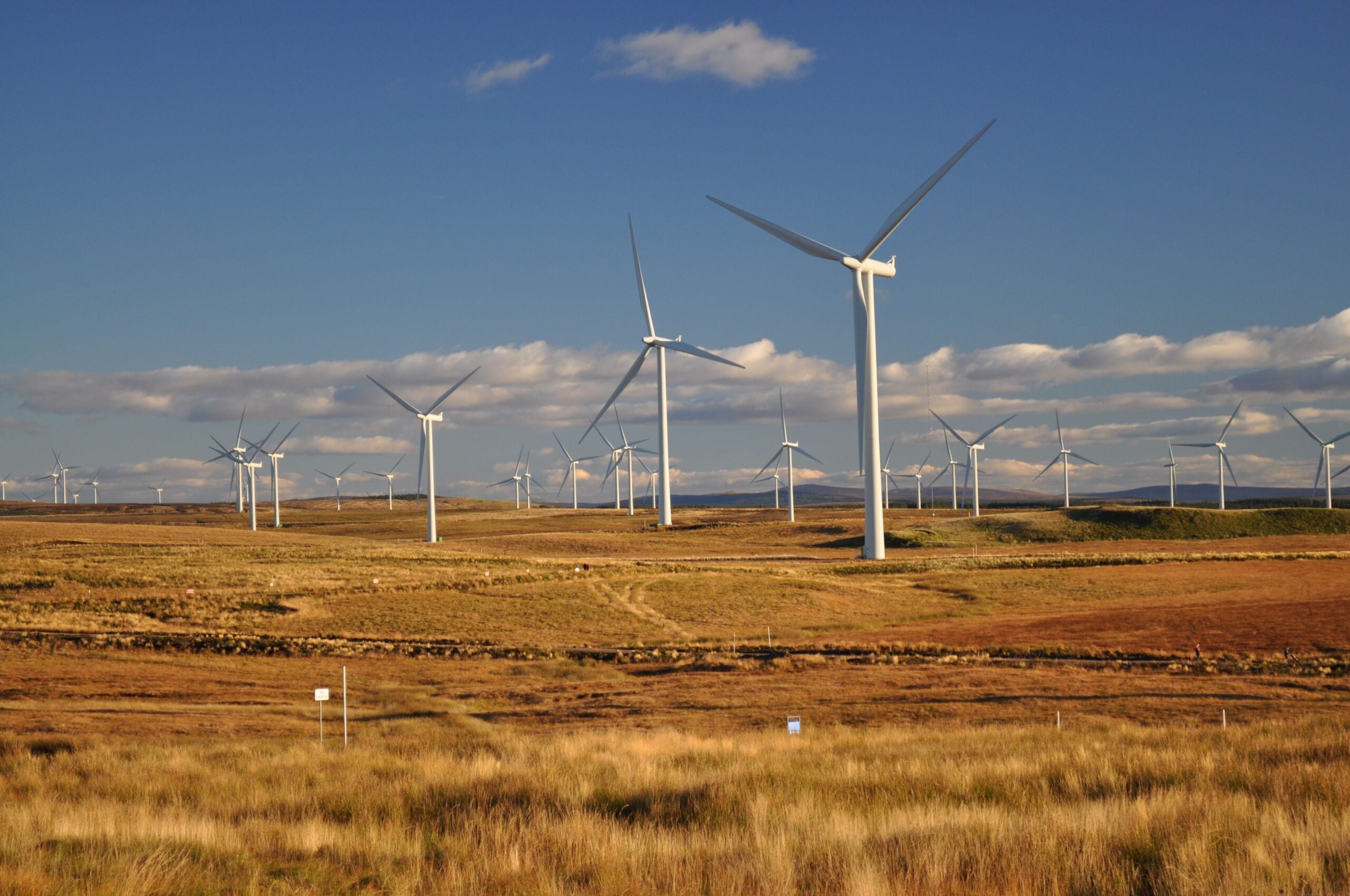
Wind turbines can feel almost abstract from the highway, tall white forms turning slowly beyond a field or ridge. Behind that familiar silhouette sits an industrial network of factories, engineers, component suppliers, construction crews, and transmission lines built to move electricity hundreds of miles.
In the United States, one company holds the clearest lead in making those machines. GE Vernova has a 58% share of the US wind turbine market, compared with 30% for Vestas, its nearest competitor.
That gap matters because the company’s footprint reaches from manufacturing plants to some of the country’s largest renewable-energy projects. Its recent expansion plans offer a useful snapshot of where American wind manufacturing is concentrated and what it takes to add more generation to the grid.
A commanding position in US wind
GE Vernova is the largest wind turbine manufacturer in the United States by market share. The company has approximately 35,000 turbines installed in the country, representing more than 80 gigawatts of generating capacity.
Its broader installed fleet is about 59,000 turbines across more than 51 countries, with roughly 120 gigawatts of renewable-energy capacity worldwide. Those figures place the US at the center of GE Vernova’s wind business, both as a manufacturing base and as a market for its equipment.
The company’s 58% US market share is nearly twice Vestas’ 30% share. Market share does not mean a single manufacturer built every part of every wind project. A modern wind farm depends on a much larger chain of workers and firms, including developers, landowners, utilities, transmission builders, maintenance teams, and suppliers. Still, the turbine manufacturer has an outsized role in determining what equipment gets built and how much capacity can be delivered.
Why the factory footprint matters
A wind turbine is a large, complicated machine, and its scale shapes the economics of producing it. Blades, towers, nacelles, generators, and other major components must be made, moved, assembled, and maintained. Expanding domestic facilities is therefore about more than adding floor space. It can increase the number of turbines a manufacturer can supply while improving its ability to support projects already operating in the field.
In 2025, GE Vernova announced nearly $100 million in investment for wind-related facilities in Florida, New York, North Dakota, and Texas. The company said the work would expand manufacturing capacity and improve production capabilities as US wind development grows.
That spending is part of a larger plan to invest about $600 million in American factories and facilities. The scale of the commitment points to a practical reality behind clean-energy targets: turbines need to be built somewhere, and large projects depend on factories that can keep up with demand. Factory expansion also brings a quieter layer of work, from tracking parts and maintenance records to the AI tools being developed for sustainability work across industrial supply chains.
- Florida: GE Vernova’s Pensacola factory is producing turbines for major US projects, including equipment for SunZia.
- New York: The company established a new wind manufacturing operation in Schenectady.
- North Dakota and Texas: Wind-related facilities are included in the 2025 manufacturing investment plan.
A 656-foot marker in Schenectady
In 2023, GE Vernova completed its first onshore wind turbine at its new Schenectady, New York, manufacturing plant. With a tip height of roughly 656 feet, it was the largest onshore wind turbine manufactured in the United States at the time. The 6.1-158 model pairs a 6.1-megawatt rating with a 158-metre rotor, a useful illustration of how much energy hardware is now being assembled far from the open plains where it will eventually turn.
The distinction is a reminder of the difference between onshore and offshore wind. Turbines at sea have been built even larger in other countries, where installation conditions and project designs can support immense structures. On land, height and component size still matter enormously, but they must also fit the constraints of roads, rail, bridges, permitting, construction sites, and nearby communities.
The Schenectady operation followed a $50 million investment intended to create new manufacturing capacity in the US. For a sector often discussed in terms of national generation totals, a factory floor in upstate New York is a more tangible measure of what expansion looks like: a place where the equipment behind those numbers begins to take physical form.
SunZia shows the scale of the next phase
GE Vernova’s US presence is especially visible in the SunZia Wind Project in New Mexico, now the country’s largest wind farm. The company is supplying 2.4 gigawatts of turbines for the project, including 674 of its 3.6-154 onshore machines. Its Pensacola facility had produced more than half of those turbines by 2025.
SunZia’s 550-mile transmission line entered service in June 2026, linking New Mexico’s wind resource with Arizona and the wider western US power grid. The high-voltage direct current line can carry up to 3,000 megawatts, while the full SunZia generation facility is planned at 3,515 megawatts and is being brought online in phases.
The pairing of a wind farm with long-distance transmission is central to the project’s significance. Generating power in a windy region is only part of the assignment. The electricity has to reach people and businesses that can use it, often far from the turbines themselves. SunZia is designed to provide enough energy for about one million US homes annually at full capacity.
For the people who manufacture, transport, construct, and maintain this equipment, projects of this size turn a broad energy transition into a sequence of exacting tasks. Each turbine is a piece of a larger system, and that system only works when generation and transmission arrive together.
The numbers behind GE Vernova’s lead
GE Vernova’s position in the US rests on both its installed base and its ability to manufacture equipment for large projects. The key figures show the scale of that lead:
- 58% share of the US wind turbine market
- 30% share for Vestas, the next-largest competitor cited
- About 35,000 GE Vernova turbines installed in the US
- More than 80 gigawatts of US generating capacity from those turbines
- About 59,000 turbines installed across more than 51 countries
- Approximately 120 gigawatts of renewable-energy capacity worldwide
- 2.4 gigawatts of GE Vernova turbines planned for SunZia
- 674 GE Vernova 3.6-154 turbines planned for the SunZia project
What comes next
GE Vernova’s lead does not settle every question facing US wind power. Manufacturing capacity is one part of a much bigger picture that includes grid connections, transmission construction, project financing, permitting, maintenance, and local decisions about where turbines should be built.
But the company’s scale makes it a significant participant in whatever comes next. Its turbines are already spread across the country, its US factories are being expanded, and its equipment is part of a project designed to send wind-generated electricity across much of the western grid. The same industrial shift is creating demand for better data on materials, emissions, and operations, including AI-assisted sustainability planning inside large companies.
That is the quieter story inside the market-share figure. The largest manufacturer is not simply building tall machines. It is helping determine how quickly a growing source of power can move from a distant horizon into homes, workplaces, and the wider electric grid.