NASA finally put names on Artemis 3, but the mission is still the real puzzle
We all know how this goes by now. NASA names a crew, the headlines fixate on the people, and then the actual mission details keep shifting under their feet. That is very much the Artemis 3 story this time around, according to Jeff Foust’s report in The Space Review: the agency has its astronauts, but the flight plan, the lander tests, and the schedule are all still being worked out.
NASA announced the Artemis 3 crew at Johnson Space Center last Tuesday, with Randy Bresnik commanding, Luca Parmitano piloting, and Frank Rubio and Andre Douglas serving as mission specialists. Bob Hines was named as backup. The agency’s own event also filled in more of the mission profile than it had previously shared, which matters because Artemis 3 is no longer the first crewed lunar landing attempt. In February, NASA revised the mission so it would instead test lunar landers in low Earth orbit.
What changed about Artemis 3
The version of Artemis 3 described at the announcement is very different from the one most of us had in mind a year ago. Instead of aiming straight for the Moon, Orion will first dock with a Blue Origin Blue Moon Mark 2 prototype in low Earth orbit. After two days of systems testing, Orion will undock and later rendezvous with a Starship lander prototype for a separate docking test before returning to Earth.
That is a lot of moving parts, and it is the point. NASA says the revised mission is meant to gather data on how the Orion spacecraft behaves with different landers attached, while keeping the tests closer to home than a lunar mission would. Jeremy Parsons, who is set to become Artemis program manager, said the agency wants key information about systems astronauts will rely on later, but in an environment that is much closer than the Moon.
| Element | Artemis 3 plan described by NASA |
|---|---|
| Launch sequence | Blue Moon Mark 2 launches first and loiters in low Earth orbit for up to 90 days |
| Orion mission | Orion launches on SLS without the upper stage used on earlier missions |
| Blue Moon test | Orion docks for about two days while astronauts test systems, including life support |
| Starship test | Orion later docks with a Starship prototype, but the astronauts do not enter Starship |
| Return | Orion undocks and splashes down in the Pacific |
The crew tells us as much about the schedule as the people
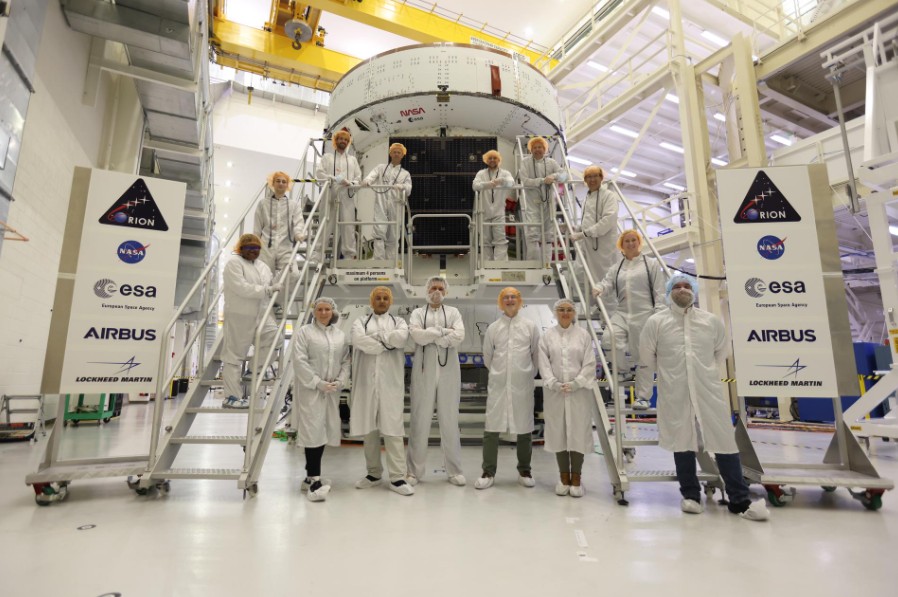
Image Credit: NASA/Ben Smegelsky
The crew mix is mostly veteran spaceflight experience, and that matters because NASA is working against a compressed timeline. Bresnik flew on one of the final shuttle missions and later spent a long-duration stint on the ISS. Parmitano has two long-duration station flights behind him. Rubio spent just over a year on the ISS. Douglas is the rookie, though NASA says he already trained as a backup for Artemis 2. Hines, the backup, also has six months on the station.
Bresnik said the astronauts learned of the assignment in a straightforward meeting arranged by chief astronaut Scott Tingle. He also argued that the training window should be workable, pointing to his own years of Orion involvement and Douglas’s Artemis 2 backup training. That confidence is encouraging, but we should keep the context in view. NASA has said it wants to launch Artemis 3 as soon as the middle of next year, which leaves very little slack for a mission this complicated.
It is also hard not to compare this with Artemis 2. NASA named that crew in April 2023 for a mission that was then expected in late 2024. It finally launched almost exactly three years after the crew announcement. Artemis 3 now has the extra burden of docking with multiple landers, plus all the coordination that comes with a plan NASA only recently settled on.
Why the crew drew so much attention
Two things about the announcement immediately stood out. The first is obvious, and NASA knew it would be obvious, there are no women in the crew. NASA administrator Jared Isaacman pushed back on the reaction in a social media post, saying the Astronaut Office assigns crews based on the mission’s objectives and the expertise needed, including test pilot experience, program development work, and availability. He also pointed to the broader astronaut pipeline, including crews already preparing for station flights and others with lunar-specific training for a future surface mission.
The second point is Parmitano’s inclusion as the ESA astronaut on the crew. That is especially notable because ESA had previously reserved seats on future Artemis Gateway missions in exchange for providing modules, and those plans became uncertain when NASA put Gateway on hold indefinitely. ESA director general Josef Aschbacher said Parmitano’s assignment was part of ongoing negotiations after NASA’s Gateway decision, and added that the news came together only recently. He also said ESA is still looking for ways to get its astronauts to the lunar surface, including cargo landers, rovers, and robotic systems for NASA’s planned lunar base.
The lander tests are where this gets tricky
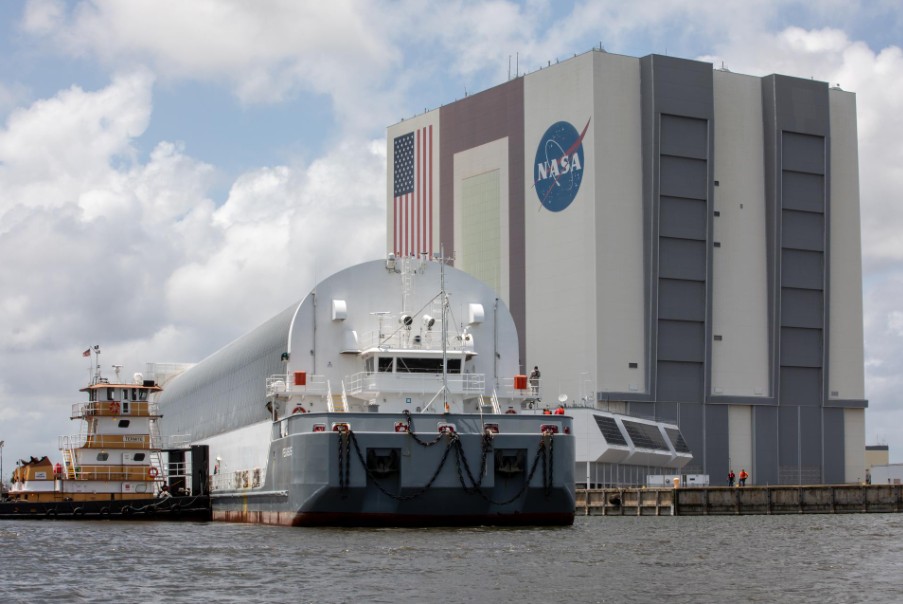
Image Credit: NASA/Ben Smegelsky
The revised Artemis 3 profile is elegant on paper and messy in the real world, which is usually how these things go. Blue Origin’s Blue Moon prototype is supposed to be in orbit first, while SpaceX’s Starship prototype comes later. NASA and its contractors have both emphasized that the current approach reduces risk by testing a key docking maneuver in Earth orbit instead of waiting until the Moon is involved.
SpaceX’s Jessica Jensen said the updated plan puts Starship and Orion together in Earth orbit first, then uses Starship for translunar injection with Orion attached before Starship undocks for a landing. Steve Creech, NASA’s Human Landing System program manager, said the change removes the need for the long loiter periods that the earlier lunar-orbit plan required. That also means less propellant and, by extension, fewer tanker flights, although NASA and SpaceX still have not said how many tanker flights will be needed.
Blue Origin has also adjusted its own approach. Instead of a transporter vehicle for moving propellant to lunar orbit, the company now plans to use transfer stages derived from Blue Moon Mark 1. Creech also noted a practical constraint that we should not lose sight of, Blue Moon was designed around New Glenn and its seven-meter fairing, which makes alternative launch options more complicated.
The suit plan may be just as important as the landers
Artemis 3 is not only a spacecraft and launcher story. It is also a suit story, and those have a habit of becoming schedule stories whether anyone wants them to or not. NASA said the Axiom Space suit will now be tested both aboard the International Space Station and on Artemis 3, with an ISS flight planned for 2027 and hardware interface checkouts on at least one lander.
Axiom has been working on the suit with Prada, and the company recently unveiled the Liquid Cooling and Ventilation Garment layer. Jonathan Cirtain, Axiom’s CEO, said the company believes the ISS will provide the best practical test environment, including the possibility of a spacewalk. NASA’s current plan, though, also includes testing how astronauts put the suit on and take it off inside the Blue Moon cabin.
That split test plan exists because the schedule is still under pressure. A NASA inspector general report in April warned that the suit could slip past 2030, citing optimistic original schedules and average development timelines for major spaceflight programs. Cirtain pushed back on that concern, saying Axiom is on track for both ISS and Artemis 3 testing next year.
What could still slip
The biggest schedule risk may be the launch vehicles themselves. Blue Origin’s New Glenn rocket suffered a pad explosion last month, which sidelined both the vehicle and the launch pad. Blue Origin says it expects to resume launches by the end of this year, but industry watchers are not universally convinced that repair work will move that fast. John Couluris, Blue Origin’s senior vice president of lunar permanence, said the company expects to have the Artemis 3 vehicle ready in 2027.
Isaacman also suggested that NASA may consider decoupling Blue Moon from New Glenn if needed, though he did not spell out the details. Creech said NASA is looking at risk mitigation options, but he also pointed out the fairing-size issue, which limits easy substitution. If the landers are not ready, Isaacman said NASA will not launch Artemis 3 just to hit a date.
That caution matters because the knock-on effects are obvious. If Artemis 3 slips, Artemis 4 and Artemis 5 slide too, and the agency’s already ambitious lunar schedule starts to unravel. NASA has also been discussing possible supplemental funding with Congress, which tells us the program is still balancing engineering reality, politics, and budget pressure all at once. Not exactly the calm little countdown some of us might have hoped for.
Where Artemis goes from here
The cleanest read on this announcement is that NASA has stopped pretending Artemis 3 is a single clean step and started treating it like the systems test it really is. That is more honest, even if it is less romantic. We get the crew, we get a more detailed mission profile, and we also get a clearer picture of how much still has to go right before anyone tries to land on the Moon again.
Bresnik summed up the mood best at the announcement when he said spaceflight is hard and that every Artemis mission will be more challenging and more complex. That is probably the most grounded line in the whole story. The crew is set, but the mission is still being assembled around them, and we are going to be watching every piece of that assembly for a while yet.