
The moon story has changed, and we should not miss the shift
We have spent decades treating the moon like a memory. Apollo put boots on the surface, the International Space Station pulled our attention into low Earth orbit, and for a long stretch the lunar surface felt like a place we had visited, admired, and left behind.
That is not the story Jason Kim is telling in SpaceNews, and the reason it matters is simple: he is arguing that the moon is moving from symbol to infrastructure. Kim, CEO of Firefly Aerospace, says the lunar surface is becoming America’s next economic frontier, not just a scientific outpost.
He is not making that case in the abstract. He points to Artemis 2’s crewed lunar orbit, Firefly’s Blue Ghost landing, and the broader push from NASA and commercial companies toward repeatable missions. In other words, we are not talking about a one-off flag plant. We are talking about a supply chain, a schedule, and a lot of hardware that still has to work in a very unfriendly place.
What the moon can actually provide
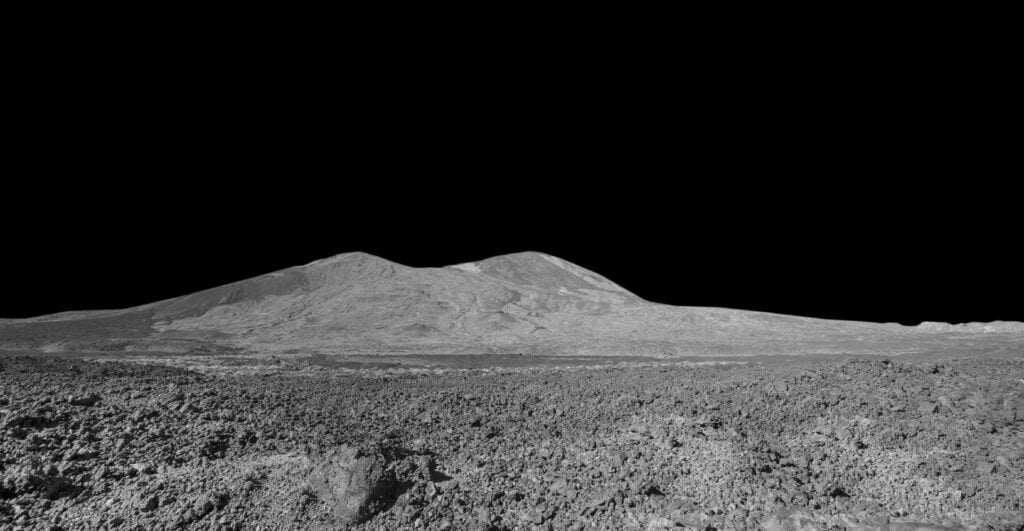
The core of the argument is resources. Kim says the moon may hold water ice, hydrogen, helium-3, and other materials that could support sustained operations and future industries. He also ties that to the moon’s low gravity, which makes moving material off the surface far cheaper than lifting it from Earth.
That is the part that turns lunar exploration into something closer to an industrial planning problem. If water ice can be turned into propellant, and if the surface can support manufacturing or resource extraction, the moon stops being just a destination. It becomes a place where we do useful work.
Kim also links that future to the broader space economy, citing the World Economic Forum’s estimate that the global space economy reached $630 billion in 2023 and could reach $1.8 trillion by 2035. The moon, in his view, sits at the center of that growth.
The sequence he lays out
- First, missions map the lunar surface, including regolith, mineral deposits, temperature extremes, drilling viability, and communications.
- Next, larger landers pre-position supplies, shelters, power systems, and equipment before astronauts arrive.
- After that comes resource extraction and manufacturing, with lunar materials used for propellant, energy, and industrial inputs.
That framework is useful because it keeps us honest. The moon economy is not a slogan. It has stages, dependencies, and a lot of technical risk between each one.
Firefly’s role, and why repeatability matters
Kim spends a lot of time on repeatability, which is where the business case starts to look less like a moonshot in the casual sense and more like an actual operating model. He says Firefly is templating the Blue Ghost lander for multiple science and discovery missions each year, sending Elytra spacecraft to lunar orbit for communications and imagery services, and working toward a larger lander for more infrastructure.
That matters because space has always been easier to admire than to operate. A single successful landing is a milestone. A fleet of systems that can fly on a schedule is the difference between a headline and a market.
He also notes that another Firefly lunar mission is planned within the year, targeting the far side with an orbiter that would keep continuous contact with territory no American spacecraft has reached before. If that holds, it would extend the logic of the first Blue Ghost mission, which operated NASA science and technology payloads on the lunar surface for more than two weeks after Firefly’s commercial landing on March 2, 2025.
| Phase | What Kim says happens | Why it matters |
|---|---|---|
| Mapping | Survey regolith, minerals, temperatures, drilling, and communications | Shows where operations are practical |
| Infrastructure | Pre-position landers, supplies, shelter, and power | Turns lunar work into something repeatable |
| Extraction and manufacturing | Use local materials for propellant, energy, and industrial inputs | Creates the economic case for staying |
NASA, CLPS, and the politics behind all this hardware
Kim’s article is also a direct argument for policy support, especially in Congress. He says NASA should fully fund its Moon Base initiative, protect it from budget swings, and expand the Commercial Lunar Payload Services program with more block-buy contracts. The point is not subtle. Companies will not build long-term lunar capability on short-term funding cycles.
That is a familiar problem in space policy. NASA’s Commercial Orbital Transportation Services program helped unlock commercial supply runs to low Earth orbit, and Kim argues CLPS can do something similar for the moon. We have seen this movie before, more or less. The difference is that the location is 240,000 miles away, and the margins for error are not generous.
There is a real strategic logic here, even if the timetable is still fuzzy. Monthly robotic missions and biannual crewed missions, which Kim says align with NASA’s direction, would create the steady cadence needed for a permanent lunar base. Without that cadence, we get impressive demonstrations. With it, we start getting a platform.
What this really means for the rest of us
The most interesting part of Kim’s piece is not the resource list. It is the shift in mental model. For a long time, lunar exploration lived in the same mental drawer as nostalgia, prestige, and national pride. Those still matter, but they are no longer the whole story.
If the hardware keeps improving, if the missions stay repeatable, and if Congress does not yo-yo the funding every time the budget mood changes, the moon could become the place where we test the next generation of space logistics. That is a much less poetic sentence than “returning to the moon,” but it is the one that matters.
Kim closes with a personal note about his young son wanting to live on the moon someday. Sentiment aside, the practical point is that a lunar economy will not appear because we wish for it. It will show up because enough of us decide to fund the boring parts, solve the hard parts, and keep showing up long enough for the system to work.
That is the real frontier here, and it is a lot less glamorous than a flag on the surface. It is launches, landers, power, communications, and political patience. The moon is only 240,000 miles away, but the harder trip is the one from one-off spectacle to something we can actually build around. That is the version of the future we should be watching.